Posted on 07/15/2026
Church Lighting Upgrade Guide: How to Plan a Modern Worship Lighting System
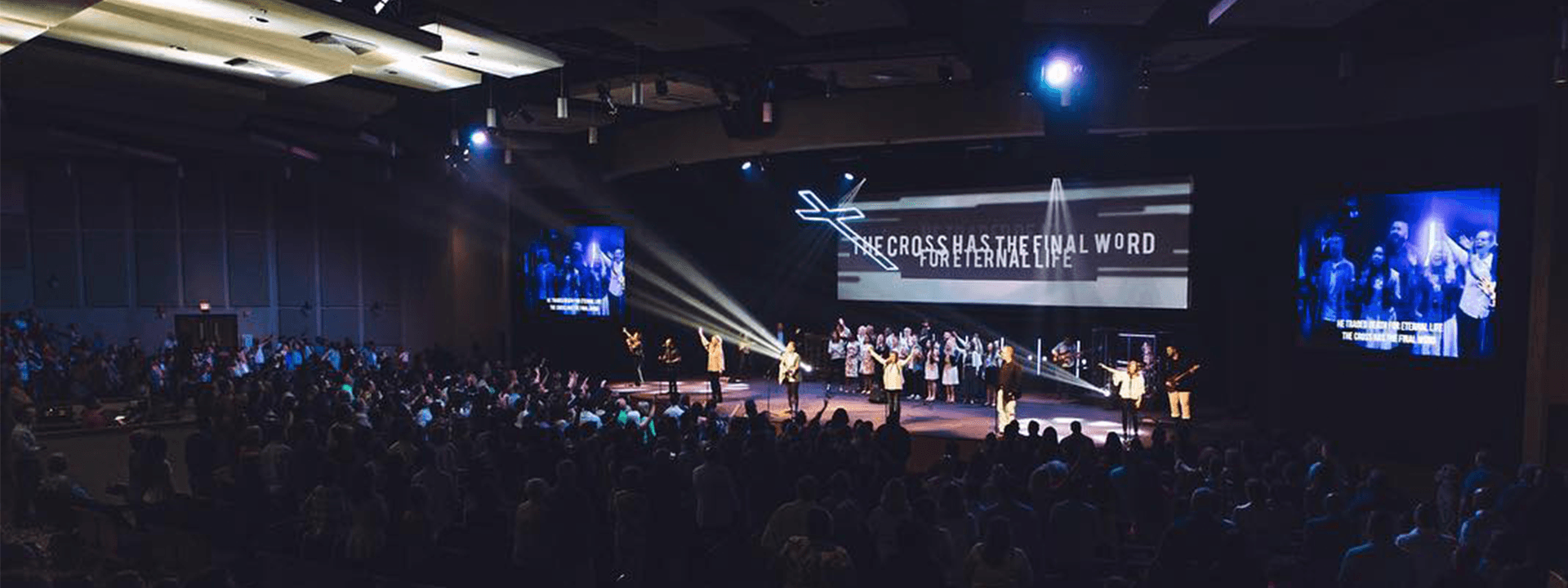
I have stood on more church platforms at 11 pm on a Saturday than I can count, aiming a fixture at a pulpit while someone holds a ladder. Church lighting is not like club lighting or theater lighting. It has to work for a quiet prayer moment and a full band set in the same service, sometimes ten minutes apart. Get it wrong, and the pastor squints into a hot spot, or the camera feed washes out everyone's face. Get it right, and nobody in the room even notices the lighting. They just feel like they can see, hear, and focus.
This guide walks through how to plan a real church stage lighting upgrade, from figuring out if you even need one, to picking fixture types, to budgeting it out in phases your finance team can actually approve. I am going to answer this the way I would answer a tech director who called me and asked, straight up, "Where do we even start?"
What Counts as a Church Stage Lighting Upgrade?
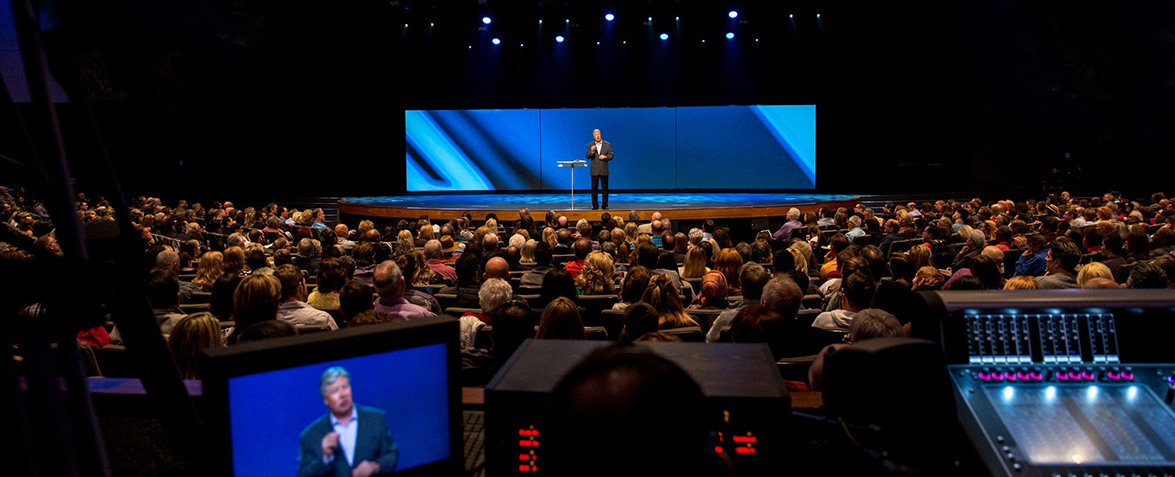
A church stage lighting upgrade means swapping out old, fixed lighting for modern LED fixtures that can change color, dim smoothly, and be controlled from a single board. Most churches are working with a mix left over from different decades: a few halogen PARs from a renovation ten years ago, some fluorescent house lights, maybe one moving head someone bought used off a classified ad. None of it talks to each other. None of it was chosen with the room in mind.
An upgrade brings the whole system under one control setup, usually DMX, so a volunteer can run the whole service from one small board or even a tablet. It also means the fixtures are built for long service life, since most churches run lighting five to seven hours a week, every week, for years without a break.
Why this matters right now: Congregations expect the same visual clarity they get from streaming platforms and concerts. A dim, flat platform reads as dated fast, even if the sermon and the music are strong.
Signs Your Church May Be Ready for a Lighting Upgrade
Most churches wait too long. Lighting is easy to ignore until it fails outright, or until someone finally says out loud what everyone has been thinking during the livestream. Here are the signs I look for when I walk into a sanctuary for the first time. If two or three of these sound familiar, it is worth getting a real quote, even if the answer ends up being a phased plan instead of a full replacement right away.
Frequent fixture failures. Bulbs burning out, ballasts buzzing, or fixtures dropping out mid-service point to equipment that is past its working life, not a one-off bad unit.
Difficulty lighting speakers evenly. If the pastor looks lit at the pulpit but disappears into shadow the moment they step forward, your coverage has gaps that
halogen fixtures cannot fix.
Dark areas on stage. Choir members or musicians standing in dim patches usually means the platform was never lit as one connected space, just a few isolated hot spots.
Excessive heat from older fixtures. Halogen and older conventional fixtures throw real heat. If singers are stepping out of position because a fixture is baking the top of their head, that is a lighting problem, not a wardrobe one.
Limited control options. A wall of manual switches or a single dimmer bank means someone has to physically flip switches during the service instead of running smooth cues.
Inconsistent color quality. Mixed fixture types and ages often mean the platform looks a slightly different color depending on where you stand, which is distracting in person and worse on camera.
Challenges with live streaming. Flicker, banding, or a picture that looks dimmer or more yellow on stream than the room looks in person is one of the clearest signals that older lighting is holding back your online experience.
Old System vs. Modern LED System
General comparison based on typical halogen and fluorescent stage rigs versus current LED worship fixtures.
Factor | Older Halogen or Fluorescent Rig | Modern LED Worship System |
|---|---|---|
Energy use | High draw, most energy lost as heat | Uses up to 90 percent less energy for the same output, per the U.S. Department of Energy |
Color changing | Manual gel swaps | Instant color change via DMX, no gel needed |
Heat on stage | Noticeable, uncomfortable for singers and speakers | Minimal heat output |
Camera performance | Can flicker or band on stream | Steady, flicker-free output built for video |
Lifespan | Around 1,000 to 2,000 hours | Commonly rated 30,000 to 50,000 hours |
Control | Manual switches or old analog boards | DMX control, presets, and scenes from one board |
The heat difference alone is worth mentioning, since I have watched more than one soloist quietly step out of a beam because a halogen fixture was baking the top of their head.
Define Your Church's Goals Before Choosing New Lighting
Before you look at a single fixture, sit down with your team and answer a few questions honestly. Every good lighting plan I have ever built started here, not on a product page. Skipping this step is how churches end up with equipment that looks great in a demo video but does not fit how they actually run a service.
What type of worship services do you host? A traditional liturgical service, a contemporary band-led service, and a blended format all put different demands on lighting flexibility.
Is live streaming a priority? If your online audience is a real part of your ministry, camera performance should shape fixture choice from the start, not get patched in after installation.
Do you host concerts or special events? Weddings, youth events, and musical programs often need more color and movement than a standard Sunday service.
How large is your stage or platform? Stage width and depth determine how many fixtures you need and what beam angles will actually cover the space evenly.
What is your ceiling height? Higher ceilings usually call for higher output fixtures to maintain the foot candle levels people need to see clearly.
Do volunteers operate the lighting? If so, ease of use and preset scenes matter more than raw feature count.
Do you need flexible lighting scenes? A church that runs the same look every week has different needs than one that shifts between sermon, worship, baptism, and special event looks in a single service.
Write the answers down. They become the brief you hand to an installer, a designer, or a manufacturer like Rasha Professional, and they keep the project focused on what your church actually needs instead of what looked impressive at a trade show.
Key Factors to Consider During a Church Lighting Upgrade
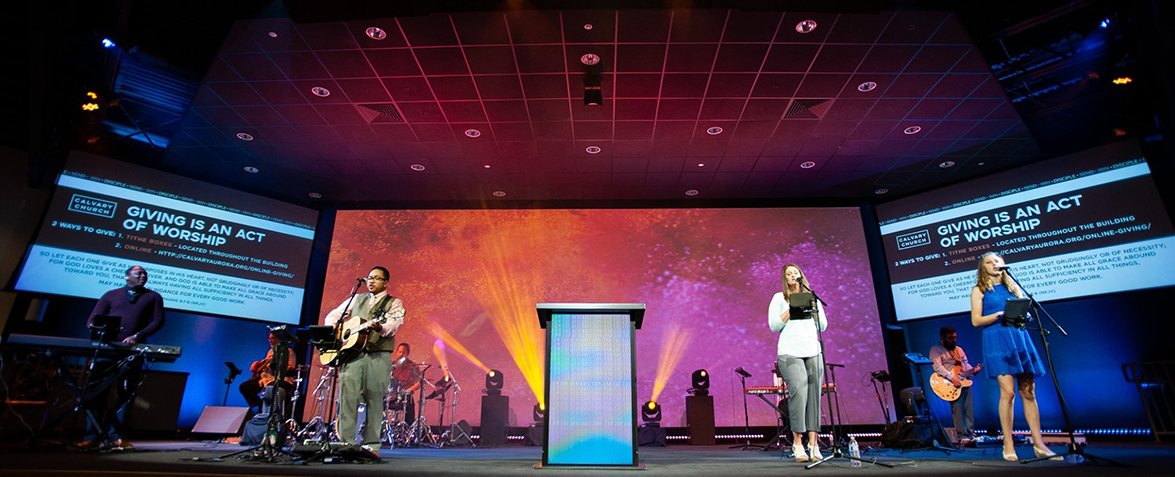
Once you know your goals, these are the practical factors that actually shape which fixtures, how many, and how they get powered and controlled. I walk through this list on every project, in roughly this order.
Stage Size
Stage width and depth determine both fixture count and beam angle. A wide, shallow platform needs different coverage than a deep stage with a choir loft set back behind the band. Measure it before you shop, not after.
Ceiling Height
Higher ceilings mean fixtures sit further from the people and surfaces they are lighting, which affects both brightness needs and beam spread. A fixture that looks perfect at 12 feet can fall short at 25 feet.
Throw Distance
Throw distance is how far a fixture sits from what it is lighting. It works together with ceiling height and stage depth to determine the right beam angle and output for each position, so the light lands where it should instead of spilling onto a wall or a screen.
Existing Rigging
Check what trussing, pipe, or mounting points are already in the building. Reusing solid existing rigging keeps costs down. Rigging that is undersized, outdated, or not rated for the new fixture weight needs to be addressed before installation day, not discovered during it.
Electrical Capacity
Older buildings were often wired for far less lighting load than a modern LED rig actually needs, or in some cases, wired for more than a modern low-draw LED system will ever use. Either way, a licensed electrician should confirm circuit capacity before fixtures are ordered.
Control System
Decide early whether you need a full DMX lighting console, a simpler scene-based controller, or a basic app-driven system. This decision should match who is actually running the board on a Sunday morning, not the most advanced option on the market.
Budget
Set a realistic number before you start pricing fixtures, and decide upfront whether the project will be a single purchase or a phased rollout across a few budget cycles.
Future Expansion
Plan power drops, rigging points, and DMX universes with room to grow, even if you are only buying part of the system now. Adding fixtures later is far easier and cheaper when the infrastructure was planned for it from day one.
How Many Foot Candles Does a Sanctuary Actually Need?
This is the most common question I get from building teams, and it has a real answer. The Illuminating Engineering Society (IES) publishes recommended foot candle levels for different spaces, and worship spaces fall into a fairly consistent range.
Typical IES-based foot candle targets for worship spaces. Actual needs vary by room size, ceiling height, and windows.
Area | Recommended Foot Candles | Notes |
|---|---|---|
General congregation seating | 20 to 30 fc | Enough for reading a program or bulletin comfortably |
Platform or stage | 30 to 50 fc | Higher for camera-facing areas and lead vocalists |
Pulpit or reading area | 40 to 50 fc | Needs even, glare-free light for reading scripture |
Choir loft | 25 to 35 fc | Wide, even wash across rows, not spot beams |
Lobby or narthex | 10 to 20 fc | Warm, welcoming, lower than the sanctuary |
Rooms with stained glass or large windows need extra thought here. Natural light shifts through the day, so the lighting plan has to hold up at a 9am service and a 6pm evening service without either one looking wrong.
What Fixtures Make Up a Modern Worship Lighting System?
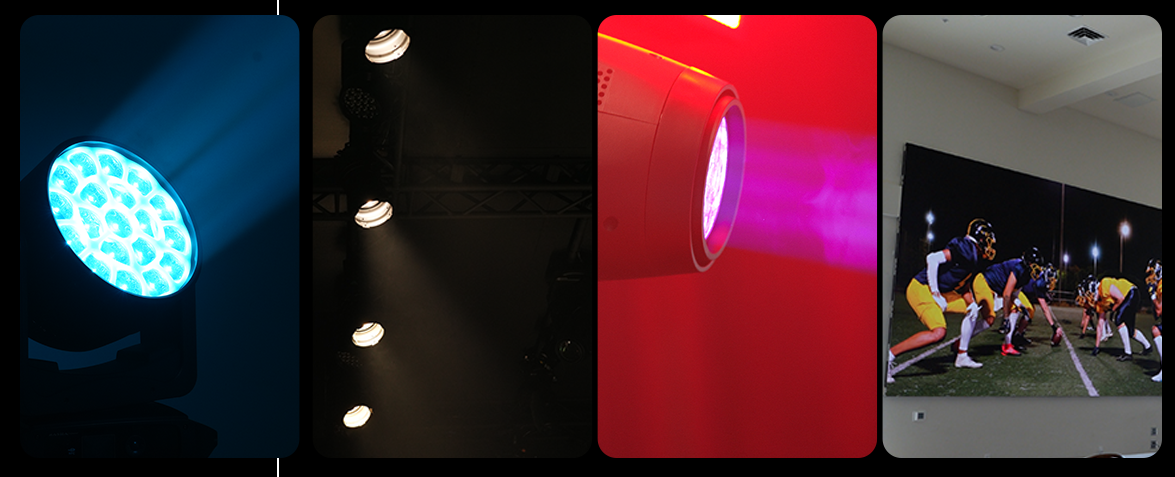
Most working systems break down into a handful of fixture types, each doing a specific job. You rarely need every category on day one. Start with what covers the platform, then build out.
Wide Wash
LED Wash / PAR Fixtures
Wide-beam fixtures that flood the platform, choir loft, or backdrop with even, color-changing light. Rasha Professional's Rodie LED wash line runs fanless and wireless, with RGBAWUV color mixing and DMX control, which covers most churches without needing to run a new data cable to every fixture.
Warm Key Light
Static Warm-White PAR Fixtures
A focused, warm 3000K source for the pulpit, a soloist, or a reading area, the kind of look that matches tungsten without the heat or the bulb changes. Rasha's Zum Cob Par runs a 100W warm-white COB LED with manual zoom from 9 to 30 degrees, so one fixture can tighten down for a key light or open up for a small wash, and it blends cleanly into a rig that still has tungsten fixtures in it.
All-in-One
Hybrid Fixtures
Spot, beam, and wash in a single moving fixture. Useful for smaller platforms where you cannot rig separate fixtures for every function. Rasha's Photon Hybrid Moving Head handles weddings, baptisms, and full band sets from one unit.
Visual Support
LED Video Walls
Used for lyrics, scripture, and live camera feeds on the platform backdrop. A direct-view LED video wall stays bright and clear even with stage lighting running, unlike a projector screen that washes out under wash light.
Wash vs. Focused Key Light: Which Do You Need First?
Wash light covers a wide area with soft, even light. It is what makes the whole platform feel lit rather than lit in patches. A focused key light, like a zoom-adjustable PAR fixture dialed down to a tight beam, is used to pull attention to one person or one spot, like a pulpit or a soloist standing center stage. Almost every worship stage needs both, but if you can only afford one category in phase one, start with wash. A well-lit platform with no key light still reads fine on camera. A platform with only tight beams and no wash tends to look like a spotlight in a dark room, which feels more like a theater than a sanctuary.
Common Mistakes to Avoid During a Church Lighting Upgrade
I have walked into more than one sanctuary to fix a system that was expensive but wrong. Almost every mistake I see traces back to one of these.
Buying only based on price. The cheapest fixture per unit often costs more over five years in failures, poor color accuracy, and lack of support when something breaks.
Ignoring camera requirements. A system that looks fine to the eye can still flicker or shift color on stream. If you livestream even occasionally, camera performance needs to be part of the fixture decision, not an afterthought.
Choosing fixtures without planning coverage. Picking a fixture model before mapping the stage and beam angles is how churches end up with hot spots and dark gaps.
Underestimating power needs. Assuming existing circuits will handle a new system without checking capacity leads to tripped breakers and rushed electrical work mid-project.
Overcomplicating the control system. A powerful console that nobody on the volunteer team can actually run does not help anyone on a Sunday morning.
Forgetting future expansion. Wiring and rigging planned only for today's fixture count makes every future addition harder and more expensive than it needs to be.
Failing to test the design. Skipping a full rehearsal before the first live service means problems get discovered in front of the congregation instead of on a quiet Saturday afternoon.
What Does a Church Lighting Upgrade Cost?
This is where I try to give straight numbers instead of "it depends" answers, even though it does depend. These are ranges based on typical projects across different church sizes, covering fixtures, control, and basic installation labor.
General cost ranges for a church stage lighting upgrade, by church size. Actual pricing varies with rigging, wiring, and control complexity.
Church Size | Seating | Typical Fixture Count | Estimated Budget Range |
|---|---|---|---|
Small | Under 300 | 8 to 16 fixtures | $8,000 to $25,000 |
Mid-size | 300 to 800 | 16 to 40 fixtures | $25,000 to $70,000 |
Large / Multi-campus | 800+ | 40+ fixtures, plus video wall | $70,000 to $150,000+ |
Estimated Monthly Energy Cost: Old System vs. LED Upgrade
Illustrative example for a mid-size sanctuary running lighting roughly 25 hours per week. Based on U.S. Department of Energy findings that LED lighting uses up to 90 percent less energy than incandescent or halogen sources.
5-Year Cost of Ownership: Keep Old System vs. Upgrade to LED
Illustrative example for a mid-size church spending roughly $35,000 on a full LED upgrade. The upfront cost is higher, but the gap narrows every year as energy and maintenance costs on the old system keep climbing. Actual numbers vary by usage and local energy rates.
Energy savings alone will not pay for a full system overnight, but they add up fast, and they stack with fewer bulb replacements and far less volunteer time spent up a ladder. That does not count the harder to measure part, which is a platform that actually looks current to a first-time guest.
What Color Temperature Should Church Lighting Be?
Most sanctuaries land somewhere between 3000K and 4000K for general house and platform light. That range reads as warm and inviting without tipping into the orange cast of old incandescent bulbs or the cold, clinical blue-white you get from cheap fluorescent tubes. A few churches I have worked with wanted a brighter, more energetic 5000K feel for a modern worship space with a lot of glass and white walls, and that works too, as long as it is consistent across every fixture in the room.
The mistake I see most is mixing color temperatures without meaning to. A church buys a few new LED PARs, keeps some older halogen fixtures running on the sides, and ends up with a platform that looks two different colors depending on where you stand. If you are upgrading in phases, keep a note of exactly which color temperature and model you bought, so the next phase matches instead of guessing.
Modern LED fixtures solve part of this automatically. Full color mixing fixtures, like Rasha's RGBAWUV wash lights, let you dial in a warm white or a true daylight white from the same unit, and adjust it season to season, or even week to week, without buying new fixtures.
Do Churches Need Moving Head Fixtures?
Not always, but more churches are adding a few. A moving head fixture can pan and tilt on command, which means one unit can cover a pulpit for the sermon and swing over to a drum kit for the second song, without a volunteer climbing up to re-aim it by hand. For a traditional service with a fixed pulpit and choir loft, static wash and spot fixtures usually cover everything you need. For a modern service format with a band, a moving stage plot, and songs that change week to week, one or two moving or hybrid fixtures save a lot of Saturday night re-focusing time.
I usually tell smaller churches to start with fixed wash and spot fixtures, since they cost less and are simpler for a volunteer team to run. Once the platform layout and service format settle into a pattern, adding a couple of hybrid or moving fixtures later is an easy phase two.
How Does DMX Control Actually Work, in Plain Terms?
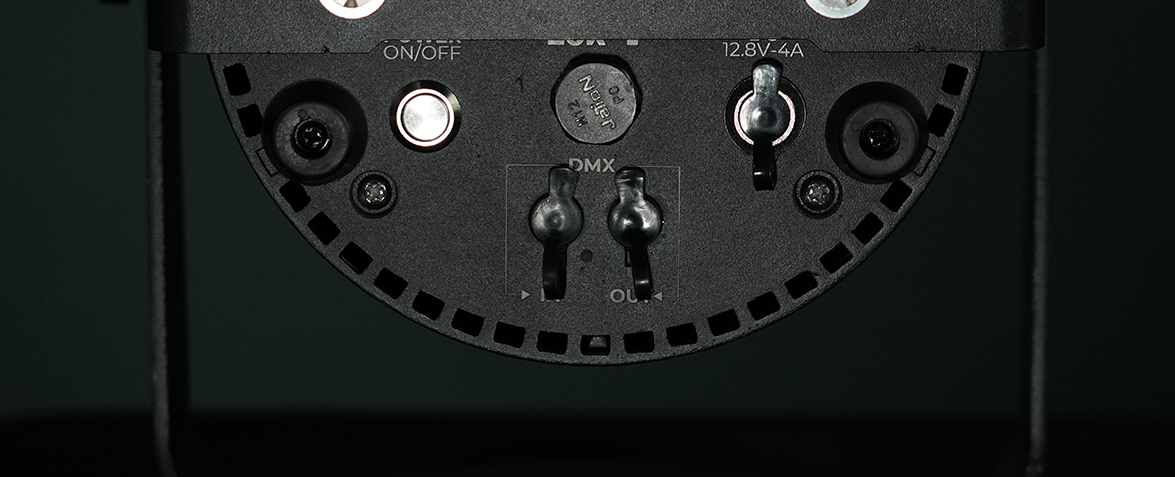
DMX is the industry standard language that lighting fixtures use to talk to a control board. Every fixture gets an address, a number that tells the board which fixture it is talking to, and the board sends commands down the line for color, brightness, and movement. You do not need to be an electrician to run it. Most modern boards let a volunteer save a "scene," a preset look for a certain part of the service, and recall it with one button. Sermon look, worship look, baptism look, all saved ahead of time.
Wireless DMX has changed a lot for churches specifically. Older buildings were never wired for a full lighting rig, and running new cable through finished ceilings and walls is expensive and disruptive. Wireless fixtures skip that step entirely. That is one reason fanless, wireless fixtures like Rasha's Rodie line show up so often in church installs. They cut the electrical work down to a power drop, not a full data run.
What About Outdoor and Campus Lighting?
Churches with outdoor courtyards, entry plazas, baptism pools, or multi-building campuses need fixtures rated for weather, not just indoor stage lighting moved outside. Look for an IP65 rating at minimum, which means the fixture is sealed against dust and water jets. Outdoor lighting also tends to run more hours per week than indoor stage lighting, since it covers evening events, parking lot safety, and building accent lighting on top of services, so long fixture lifespan matters even more outdoors than it does on the platform.
Should You Upgrade Lighting and the Video Wall Together?
If your budget allows it, yes. Lighting and video walls fight each other when they are planned separately. Wash light spilling onto a projector screen washes out lyrics and slides. A video wall picked without thinking about the lighting rig can end up too dim once the stage lights come up for a full band set. When both are planned together, the lighting team can angle wash fixtures away from the screen, and the video wall can be specified bright enough to hold up under stage lighting rather than just in a dark room.
If the budget does not stretch to both, do lighting first. A dark, flat platform is a bigger problem for the in-room experience than an older screen. You can run lyrics off a screen or projector for another season and still have a platform that looks and feels current.
What About Live Streaming? Does LED Lighting Actually Help?
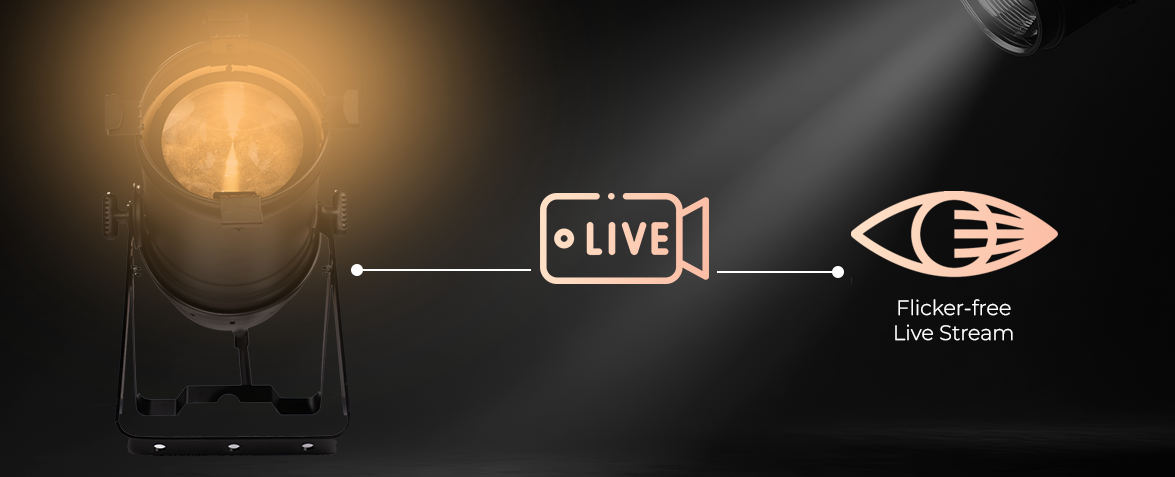
Yes, and this is one of the most overlooked reasons churches finally pull the trigger on an upgrade. Older fluorescent and halogen fixtures can cause visible flicker or banding on camera, especially at certain shutter speeds. LED fixtures built for stage use run flicker-free, which matters a lot once you are pushing a service out to a stream every week.
Color consistency matters too. If your wash lights and your spot lights are two different color temperatures, skin tones shift depending on where someone is standing, and it is distracting on camera, even if nobody in the room notices it live. Broadcast guidance from organizations like the Society of Motion Picture and Television Engineers (SMPTE) puts a strong emphasis on signal and color stability for exactly this reason, and it applies just as much to a church livestream as a broadcast studio.
How to Build a Lighting Upgrade Plan
1. Assess the existing system
Walk the room and take stock of every fixture, cable run, and control point you already have. Note what still works, what is failing, and what is simply outdated.
2. Define goals
Use the goal-setting questions earlier in this guide to write down what your church actually needs, based on service style, streaming priority, and stage size.
3. Measure the room
Get real measurements for stage width, depth, ceiling height, and throw distance. Take photos at different times of day if natural light is a factor.
4. Create a lighting layout
Map out where each fixture will go and what each one needs to cover. This is where stage size, ceiling height, and throw distance come together into an actual plan.
5. Select appropriate fixture types
Match wash, spot, and hybrid fixtures to each zone based on the layout, not the other way around.
6. Plan power and control
Confirm electrical capacity, decide on wired or wireless DMX, and choose a control system that matches who will actually run it week to week.
7. Test before installation
Where possible, request a demo or trial of key fixtures before committing to a full order, so beam angle and color match your expectations in your actual room.
Church Lighting Upgrade Planning Checklist
Keep this list handy while you plan. It covers the same ground as the steps above, in a quick reference format you can print or share with your team.
✓ Define project goals
✓ Measure stage dimensions
✓ Evaluate electrical capacity
✓ Review existing rigging
✓ Identify camera and live streaming requirements
✓ Plan for future expansion
✓ Set a realistic budget
✓ Review control system compatibility
Want a print-ready copy? Reach out to a Rasha Professional lighting specialist and we will send you a copy of this checklist you can hand straight to your building or finance committee.
Planning a Church Stage Lighting Upgrade?
Rasha Professional works directly with churches, installers, and production teams to spec out systems that fit the room and the budget. Every fixture ships with a manufacturer warranty, real technical support, and documentation your volunteer team can actually follow. Showroom and virtual demos are available before you commit to anything.
See Church Stage Lighting Fixtures
Should a Church Handle the Upgrade In-House, or Bring in a Professional?
It depends on what you are changing. Swapping fixtures one for one, using the same power and rigging points, is something a capable volunteer team can often handle, especially with wireless DMX fixtures that skip the need for new cable runs. Anything involving new rigging points, electrical work, or a full redesign of the platform layout is worth bringing in an installer or lighting designer for, even just for the planning phase. A few hours of professional consultation up front can save a church from buying the wrong fixture count or missing a zone entirely.
I worked with a mid-size church a while back that had already bought fixtures on their own, based on a lighting store recommendation that had nothing to do with their actual room. The fixtures were too narrow beam for the width of their platform, so they ended up with two bright hot spots and dark gaps between the singers. A short planning call before the purchase would have caught that. Measuring the room and mapping beam angles before buying anything is not an extra step, it is the step that determines whether the rest of the project works.
What Should You Look for in a Lighting Manufacturer or Supplier?
Church budgets are tight and lighting equipment is not something most facilities teams shop for often, so the supplier matters as much as the fixture. A few things worth checking before you commit to a vendor:
Direct manufacturer warranty. A warranty backed by the company that actually built the fixture is worth more than a reseller add-on plan, especially for claims and replacement speed.
Real technical support. Someone who can talk a volunteer through a DMX addressing issue over the phone on a Saturday night, not just a support ticket queue.
Documentation you can hand to a new volunteer. Manuals and setup guides matter more in a church than almost anywhere else, since the person running the board changes every few years as volunteers rotate.
A demo option before you buy. Seeing a fixture in a showroom, or even a virtual walkthrough, catches beam angle and color mismatches before they become a return shipment.
Financing or phased purchase options. Church finance committees plan in fiscal years, not project timelines, so a supplier that can structure a purchase in phases makes budgeting far easier.
Rasha Professional is built around this exact list, since it is a U.S. manufacturer working directly with churches, installers, and production teams, with in-house support and both showroom and virtual demo options before you commit to a full order.
Common Questions About Church Stage Lighting Upgrades
What is the best lighting for a church stage?
There is no single best fixture, since it depends on the room. Most working systems combine wide LED wash fixtures for even platform coverage with a smaller number of warm, zoom-adjustable key light fixtures for the pulpit and featured performers. Hybrid fixtures work well for smaller stages that cannot support separate wash and key light rigs.
How long does an LED church lighting system last?
Quality LED fixtures are commonly rated between 30,000 and 50,000 hours of use. At a typical church schedule of five to seven hours a week, that works out to well over a decade of regular service before output starts to noticeably fade.
Can old halogen fixtures be mixed with new LED fixtures during a phased upgrade?
Yes, for a transition period. It is common to run a mixed rig while a church upgrades in phases. The main thing to watch is color temperature mismatch between old and new fixtures, which shows up more on camera than in the room.
Does church lighting need to match the building's architecture?
It helps. Modern LED fixtures are compact enough to blend into most sanctuary ceilings and trusses without standing out when they are off. Accent lighting can also be used separately to highlight stained glass, arches, or other architectural features without competing with the stage lighting.
Who should be involved in planning a church lighting upgrade?
At minimum, the tech director or volunteer who runs the board every week, someone from facilities or finance, and the lead pastor or worship leader who knows how the platform gets used across different service types. Leaving out the person who runs the board week to week is the most common planning mistake I see.
Do LED church lights need special wiring or electrical upgrades?
Usually not for a like-for-like fixture swap. Most modern LED stage fixtures draw far less power than the halogen or incandescent units they replace, so existing circuits often have room to spare. Wireless DMX fixtures also cut down on new low-voltage wiring, since fixtures can be controlled without running a dedicated data cable to each one. A licensed electrician should still confirm circuit capacity before a large install, especially in older buildings.
How often should church lighting be replaced or upgraded?
There is no fixed schedule, but most LED systems installed today should perform well for 10 to 15 years of typical weekly use before output noticeably drops. What tends to change sooner is the control system and the creative needs of the church, so many teams add fixtures or update their control board every few years, rather than replacing the entire rig at once.
Practical Tips for Training Volunteers on a New System
Training gets skipped more than any other step, and it is the reason some churches spend real money on an upgrade and still run it on one preset for the next three years. Volunteers rotate, and the person who understood the old board might not be around by the time the new one ships. A few things that make training stick: save a small set of named scenes covering the services you actually run, sermon, worship, baptism, communion, rather than leaving a blank board and expecting a volunteer to build looks from scratch. Write a one-page cheat sheet with photos of the board and what each button does, and keep a copy in the tech booth. If a volunteer gets stuck during rehearsal, that is useful information about what needs to be simplified before Sunday, not a sign the system is too complicated.
Bringing It All Together
A church lighting upgrade is not about chasing trends. It is about giving the people running your services a system that works every single week, without a ladder, without guesswork, and without a camera feed that looks worse than the room. Start with the platform, get your foot candle levels right, pick fixtures that match how your services actually run, and budget it in phases if you need to. The room will feel different the very first Sunday the new system runs, and so will the team running it.
Frequently Asked Questions
Get answers from the team behind the products—real support, reliable performance, and service you can trust.
Yes. We provide product demos, technical training, and hands-on walkthroughs through our headquarters and authorized partners—so you and your crew get the most out of your gear.
Rasha Professional provides a complete range of event solutions, including lighting fixtures, effect machines, video walls, and trussing systems—all designed for performance and durability.
Absolutely. Our in-house team provides real technical assistance, setup guidance, and repair support. We stand behind every product we ship.
You can purchase through authorized resellers or contact our sales team for product recommendations, demos, and quotes.
Most Rasha units support DMX, RDM, Auto, and Sound modes—offering full flexibility for manual or programmed control.
Yes. Many of our fixtures are IP65-rated, built to handle rain, dust, and humidity—ideal for outdoor shows, festivals, and permanent installs.
Arenas, theaters, entertainment AV productions, entertainment venues, houses of worship, AV integrators, sports venues, mobile DJs, educational institutions, and parks and recreation facilities rely on our technology every day.
Rasha products are built for real-world use—durable, quick to set up, and designed to deliver consistent results across lighting, effects, video, and trussing. We focus on reliability and usability, not hype.
Tyler Hayes
With over 15 years in the entertainment lighting scene, Tyler Hayes has helped shape unforgettable live experiences across stages, clubs, and festivals. He writes about how lighting transforms moments into lasting memories. His passion lies in inspiring others to see light not just as illumination, but as the heartbeat of every great event.



