Posted on 07/20/2026
How the K2 FX Solves Common Broadcast Lighting Challenges
A camera does not forgive lighting mistakes the way a human eye does. Flicker, color shifts, and slow rigs show up on screen for everyone to see. This guide walks through the real problems broadcast lighting teams deal with every day, and how one fixture, the Rasha K2 FX moving head wash, was built to fix them.
If you light for TV, streaming, or any camera-facing production, you already know the checklist. No flicker. Even color. Fast setup. Reliable data. Gear that survives a full touring season. We built this piece around that checklist, question by question, the way a lighting director would actually ask it.
What Makes Broadcast Lighting Different From Regular Event Lighting?
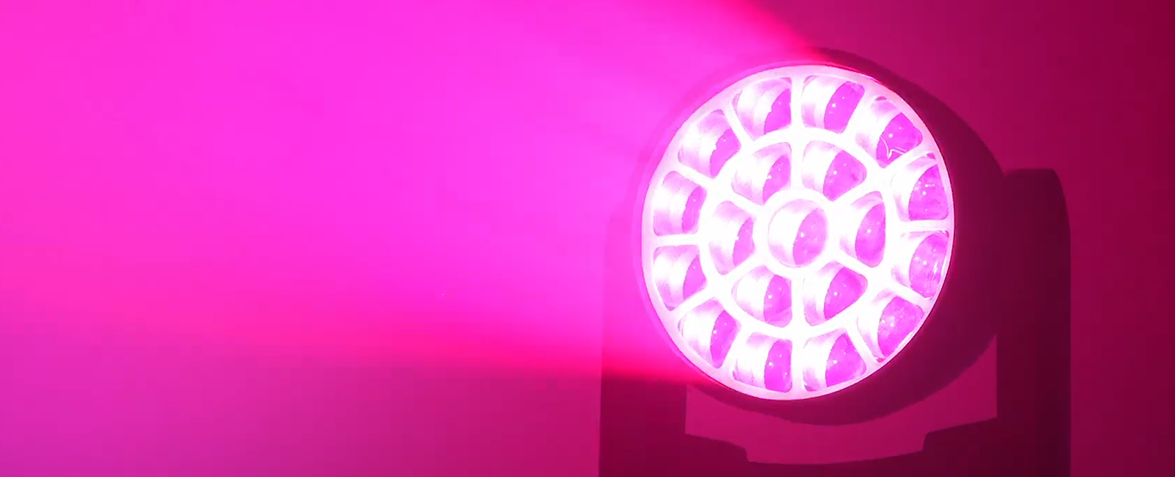
Event lighting only has to look good to people in the room. Broadcast lighting has to look good to a camera, then get compressed, then get watched on a phone or a TV screen. That extra step changes everything about how a fixture needs to perform.
A camera picks up things the human eye smooths over. Small color shifts between fixtures. A slight flicker at certain shutter speeds. A wash light that cannot also throw a pixel effect for the intro graphics package. On a broadcast set, every one of those small issues becomes a visible, permanent part of the recording.
The short answer: Broadcast lighting has one extra judge in the room, the camera, and it does not forgive what the human eye ignores.
Why Does Flicker Ruin Broadcast Footage, and How Does the K2 FX Stop It?
Flicker happens when a light source and a camera shutter fall out of step. The light pulses on and off faster than the eye can see, but a camera sensor can still catch the gap between pulses. The result is banding, rolling shadows, or a picture that pulses in a way no director asked for.
This is a well-documented problem in camera work, not just a lighting one. B&H's explainer on flicker-free lighting covers why frame rate and shutter speed combinations make some lights unusable on camera, no matter how good they look in person.
The K2 FX gives you a way around this. It runs on selectable PWM at 1200 Hz, 2400 Hz, 16000 Hz, and 25000 Hz. That range lets a gaffer or LD match the fixture's pulse rate to the camera's shutter angle, instead of hoping for the best on a tech scout.
Quick Reference: PWM Setting and What It Solves
PWM Setting | Best Used For | Why It Helps |
|---|---|---|
1200 Hz | Standard broadcast cameras, slower shutter speeds | Stable base rate for most studio cameras |
2400 Hz | Mixed lighting rigs, general production | Reduces visible banding on secondary cameras |
16000 Hz | High frame rate capture, slow motion replay | Keeps output steady above standard shutter ranges |
25000 Hz | Close-up shots, high-end cinema cameras | Removes flicker at the highest sensitivity settings |
How Does Color Consistency Affect a Broadcast Set?
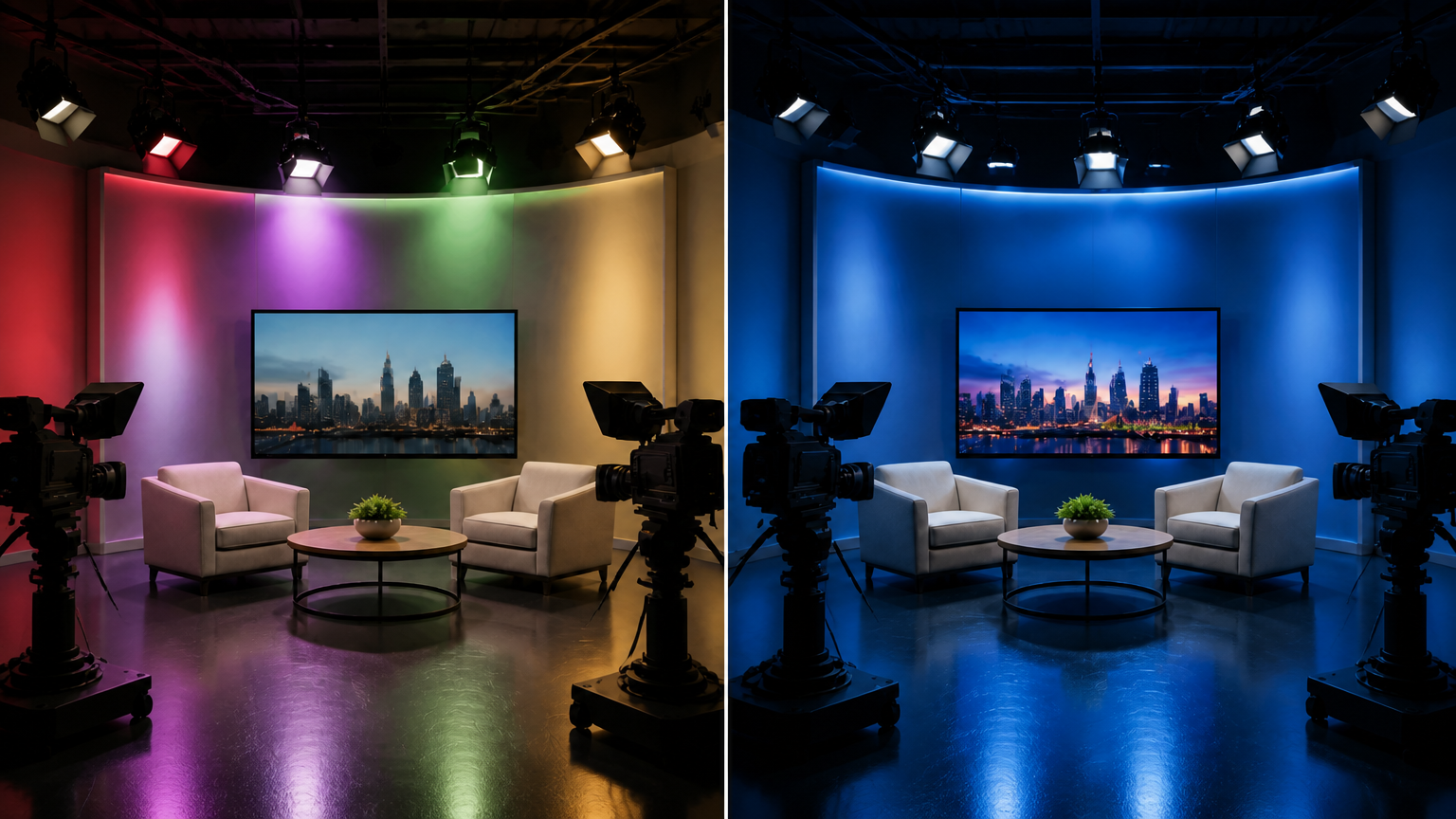
Cameras magnify color mismatch. If two fixtures are even slightly off in white balance, a viewer notices it during a wide shot, even if nobody in the room did. This is why color engines and factory calibration matter so much more in broadcast work than in a one-night event.
Q: Does the K2 FX ship pre-calibrated?
A: Yes. Every K2 FX ships factory-calibrated, and it uses a 19-LED RGBW engine rated at 50,000 hours, so the color output stays consistent fixture to fixture, and stays consistent as the fixture ages.
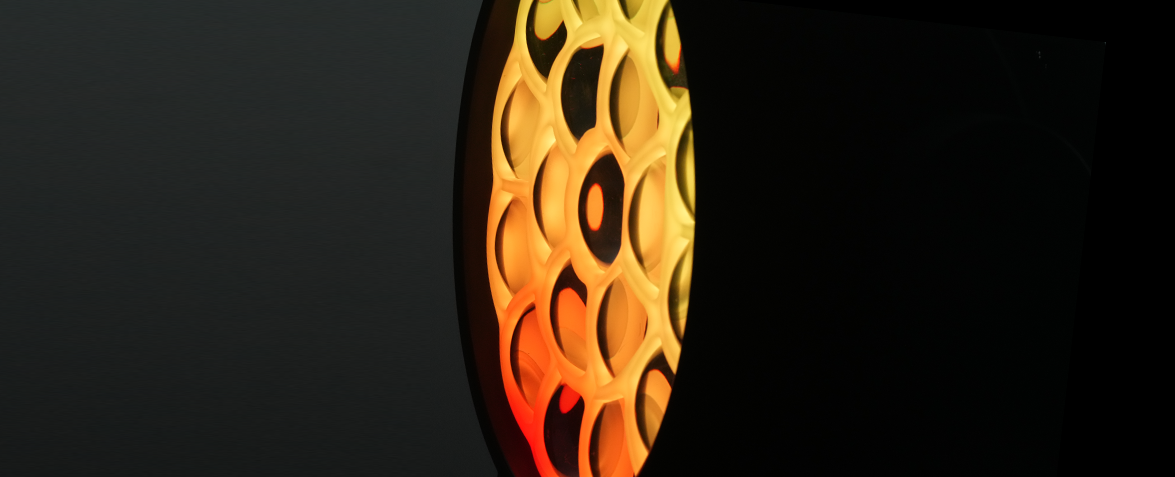
The K2 FX also carries virtual color temperature presets from 2,000K to 10,000K, plus 16-bit dimming and nine built-in DMX color macros. For a broadcast set that shifts between a warm interview segment and a cool graphics wall, this means the lighting team can match tone without repatching or swapping gel.
Can One Fixture Really Replace a Wash Light and a Pixel Light?
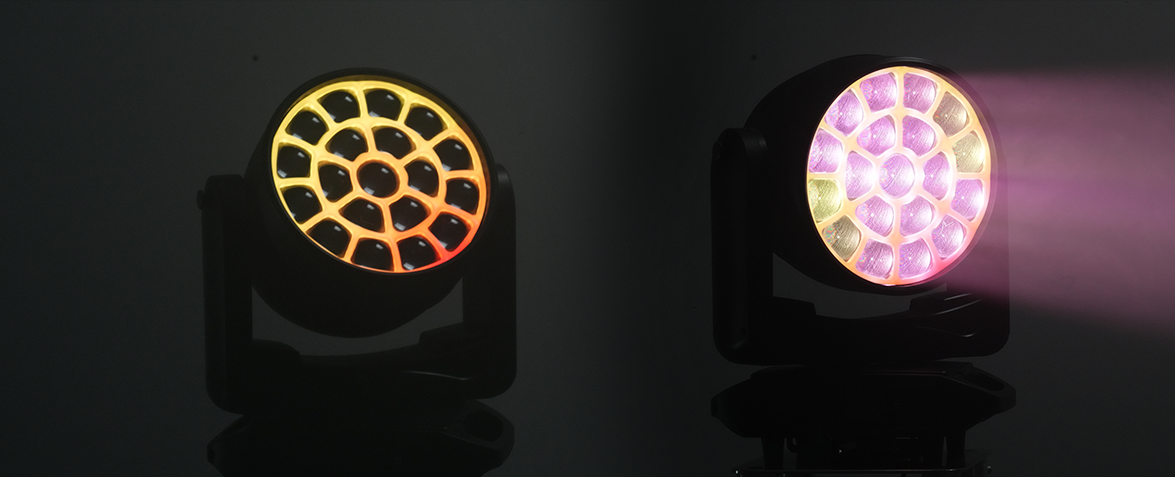
On most broadcast rigs, wash coverage and pixel-mapped background effects come from two separate fixture types. That means two power runs, two data runs, and two rigging positions for every look. The K2 FX combines both into one body.
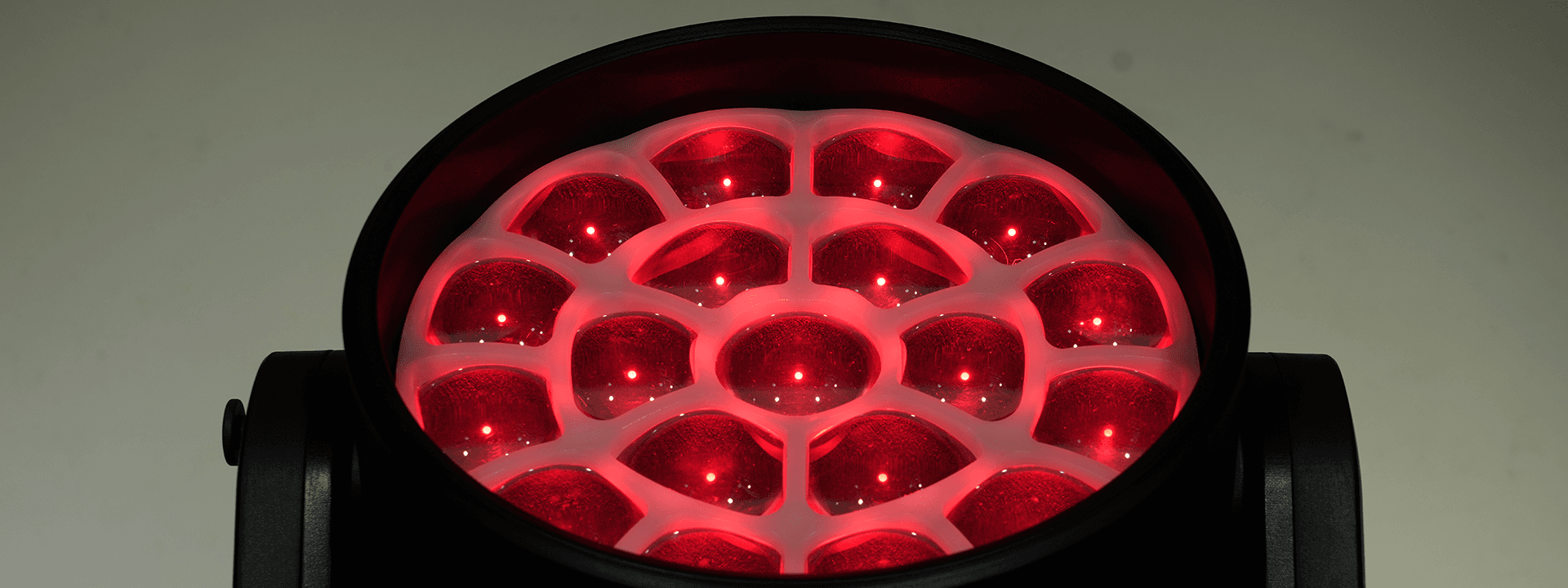
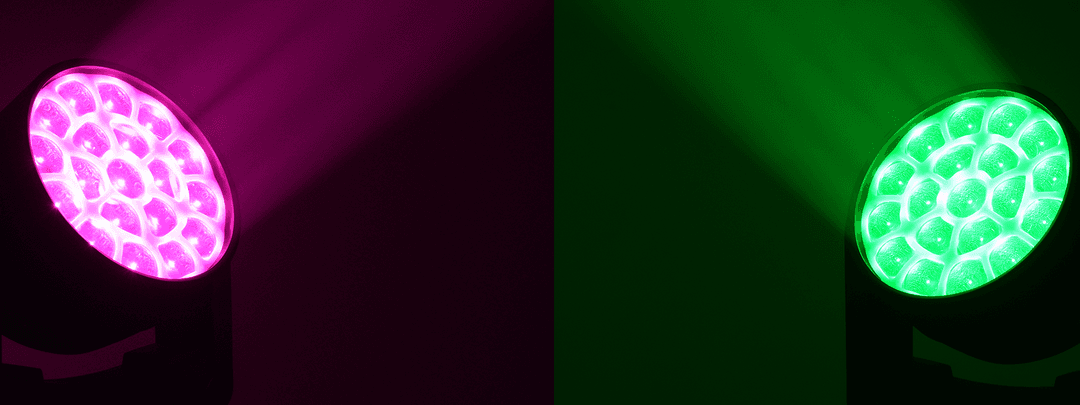
It pairs a 19-LED RGBW main engine for wash coverage with a 210-LED LumaPix panel for pixel effects, running as a second creative layer on the same fixture. A designer can wash a host in even light and run a chase effect on the panel behind them, from one unit hanging in one spot.
Traditional Two-Fixture Rig vs. K2 FX Single-Fixture Setup
Factor | Wash Light + Separate Pixel Fixture | Rasha K2 FX |
|---|---|---|
Rigging points needed | 2 positions | 1 position |
Power runs | 2 circuits | 1 circuit |
Data lines to patch | 2 | 1 |
Load-in time per look | Higher | Lower |
Pixel effect macros available | Varies by fixture | 126 LumaPix chase macros |
Main wash macros available | Varies by fixture | 32 main LED chase macros |
Fewer positions also means fewer truss points to load, fewer cables to trace when something goes wrong mid-broadcast, and fewer spare fixtures a rental house needs to stock. Explore the full moving head wash lineup to compare where the K2 FX sits against other wash options.
How Does the Zoom Range Help Camera Framing?
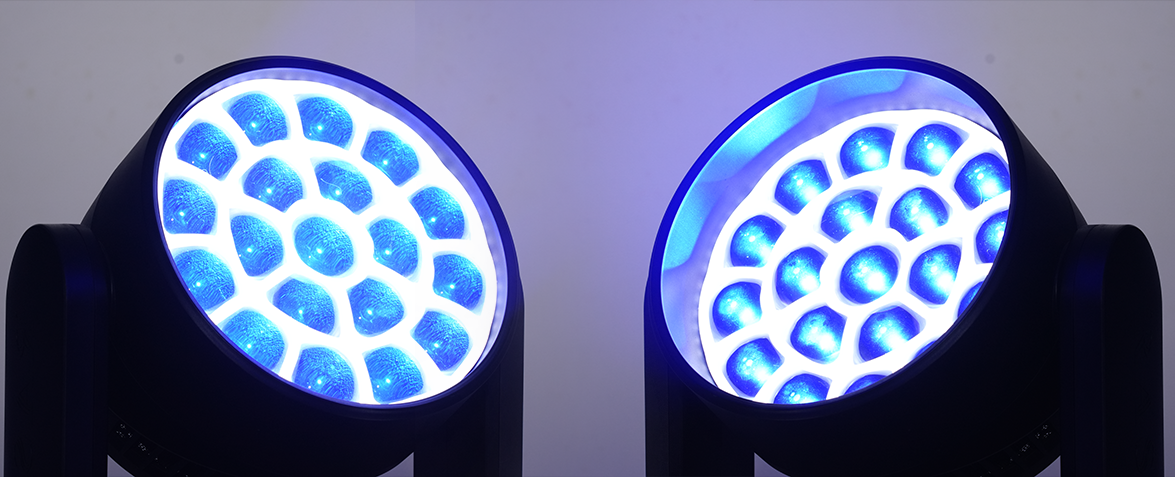
A broadcast set changes shot size constantly. A wide establishing shot needs a soft, open wash. A tight two-shot interview needs a controlled beam that does not spill onto the background wall. Re-rigging a fixture for every shot change is not realistic during a live broadcast.
The K2 FX has a motorized zoom from 5.5° to 55°, an 11:1 zoom ratio. That covers a tight beam for accent work and a full wash for wide coverage, from the same hang, adjusted from the console during the show.
By the numbers: 42,400 lux at 5 meters on narrow zoom, and 1,120 lux at 5 meters on wide zoom, from a 4,500 lumen source. That is enough spread between the two settings to cover both a tight interview shot and a wide studio wash without changing fixtures.
Why Does Continuous Pan and Tilt Matter for Broadcast Camera Moves?
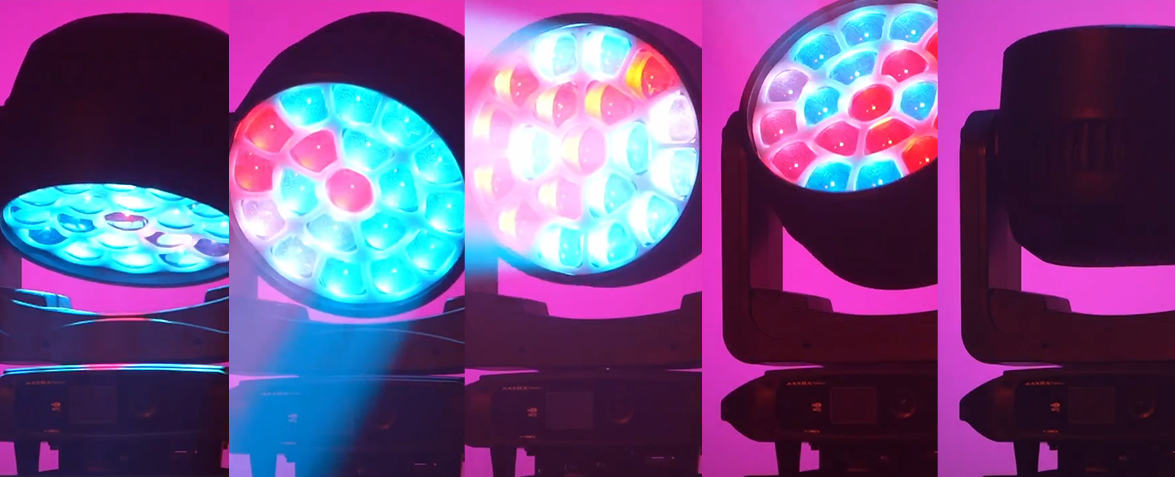
Broadcast camera operators do not always move in one direction. A jib shot might sweep left, hold, then sweep back right. A fixture that has to un-wind or hits a mechanical stop mid-move will visibly jerk or lag, and that shows up on camera as a stutter in the light.
The K2 FX runs continuous pan and tilt rotation with 540°/270° electronic correction and 16-bit pan/tilt resolution. It does not need to physically reset its position between cues, so fast repositioning during a live segment stays smooth on screen.
What Protocols Does a Broadcast Rig Need, and Does the K2 FX Support Them?
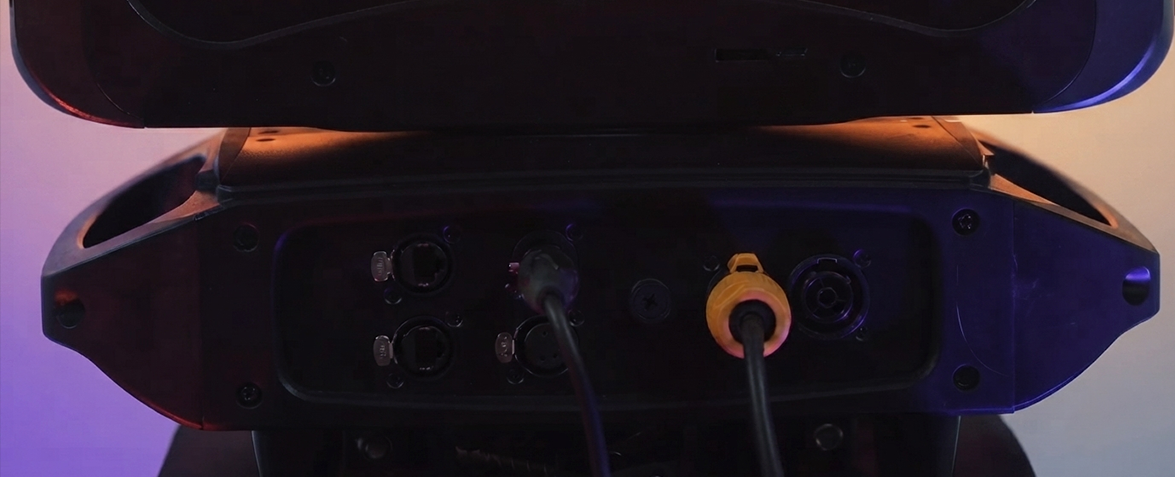
Broadcast trucks and studio control rooms rarely run on a single protocol. A show might come in over Art-Net from a media server, get patched through sACN for the main console, and still need standard DMX512 for a legacy dimmer rack. Fixtures that only speak one protocol force a gateway or converter into the signal chain, which is one more point of failure during a live show.
DMX512 itself is not a casual spec. It is an ANSI standard maintained through the entertainment industry's own technical standards body, documented in detail by ESTA's Technical Standards Program. A fixture that supports it correctly, along with the newer network protocols, saves a broadcast rig from needing extra hardware just to translate one signal into another.
K2 FX Control and Protocol Support
Protocol / Mode | Supported | Where It's Used on a Broadcast Rig |
|---|---|---|
DMX512 / RDM | Yes | Legacy consoles, remote device management |
Art-Net | Yes | Media servers, network-based lighting control |
sACN | Yes | Modern consoles, multi-universe shows |
CRMX (wireless) | Yes | Untethered fixtures, fast rig changes |
W-DMX (wireless) | Yes | Backup wireless control path |
DMX Channel Modes | 36Ch / 49Ch / 125Ch | Matches simple or advanced show files |
The wireless side runs on a Lumen Radio TiMo FX module, working as either receiver or transmitter. That flexibility matters on broadcast sets where running data cable to every truss position is not always possible in the time available.
How Does NFC Addressing Save Time on Broadcast Load-ins?
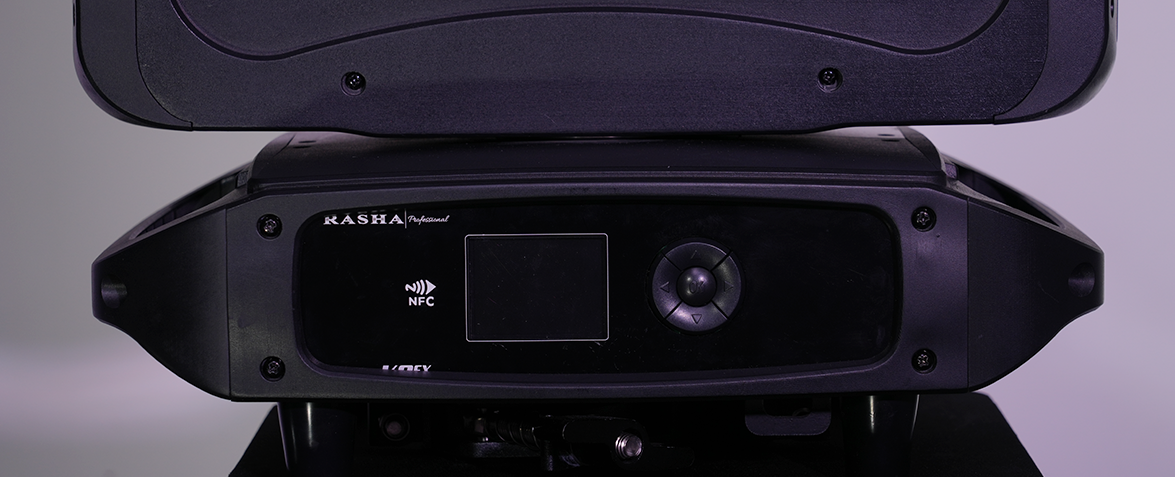
Broadcast schedules are tight. A crew often has hours, not days, to hang, address, and focus a rig before air. Manually setting DMX addresses on a small LCD menu, one fixture at a time, adds up fast on a large rig.
Q: How does NFC addressing work on the K2 FX?
A: The fixture uses a 5-button menu with NFC enabled, so addressing and configuration can happen wirelessly with a compatible device, without climbing to reach the fixture or waiting for a full menu scroll. Combined with the full color 180° reversible LCD, techs can also read fixture status from either side of the unit while it is hung.
Is the K2 FX Built to Survive Touring and Daily Broadcast Use?
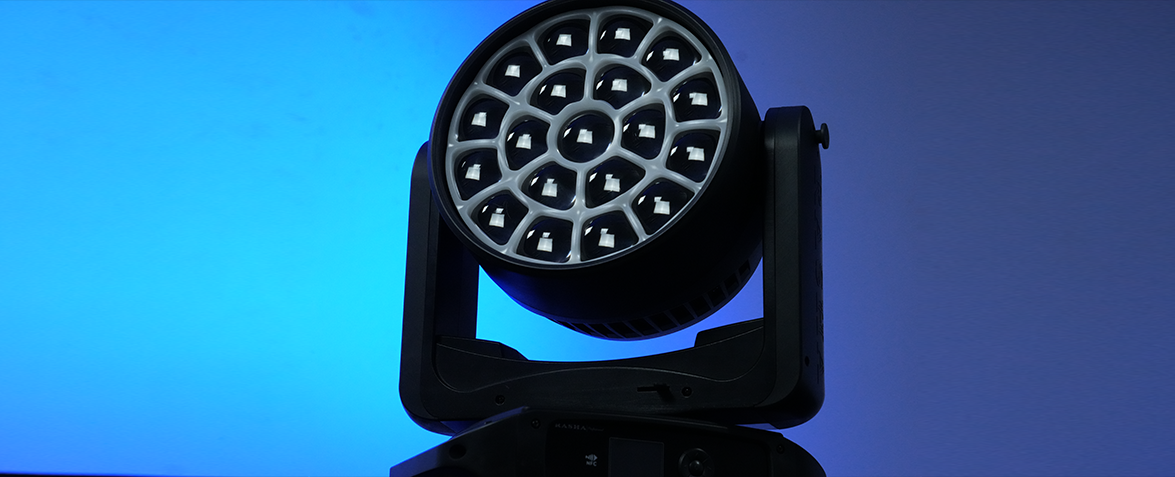
A studio fixture gets turned on and off constantly, sometimes several times a day across rehearsals and live segments. A touring fixture gets loaded, unloaded, and re-rigged at a different venue every night. Either way, the housing, cooling, and electrical design need to hold up over months of that cycle, not just survive a demo.
Build and Reliability Specs
Spec | Detail |
|---|---|
Housing | High-impact flame-retardant thermoplastic, satin black finish |
Cooling | Active, temperature-controlled fans with auto, high, and low modes |
Operating Temperature | 14°F to 113°F (-10°C to 45°C) |
Input Voltage | 110 to 240 VAC, 50/60 Hz, auto-ranging |
Power Draw | 788 watts, 6.7 amps @ 120V or 3.7 amps @ 208V |
Rigging | Two ¼-turn Omega bracket points, one bottom-center safety cable point |
Weight | 42.3 lbs (19.2 kg) |
Certifications | ETL, CE, RoHS, FCC |
Warranty | 2-year limited warranty on the fixture |
Auto-ranging voltage input matters more than it sounds like on paper. A touring rig crossing state lines, or a broadcast facility with mixed circuits, does not need a separate step-down setup for this fixture. It runs on what is available. For fixtures used near talent or audience seating, the FCC's compliance guidance is a useful reference point for why certifications like these are worth checking before a purchase, not after.
What's in the Box, and What Does the K2 FX Cost?
Item | Detail |
|---|---|
SKU | RP-K2-FX-BLK |
MSRP | $2,502.99 |
Included | 1x fixture, 1x IP65 locking power cable, 1x user manual, 2x Omega mounting bracket |
Ideal Use | Live production, broadcast, touring, venue and hospitality, worship, premium event rigs |
For teams that need to see the fixture run before committing budget to it, Rasha offers both showroom and virtual options. You can book a demo and watch the zoom, pixel mapping, and color engine in action before it goes on your rider.
Why Choose Rasha Professional for Broadcast Lighting?
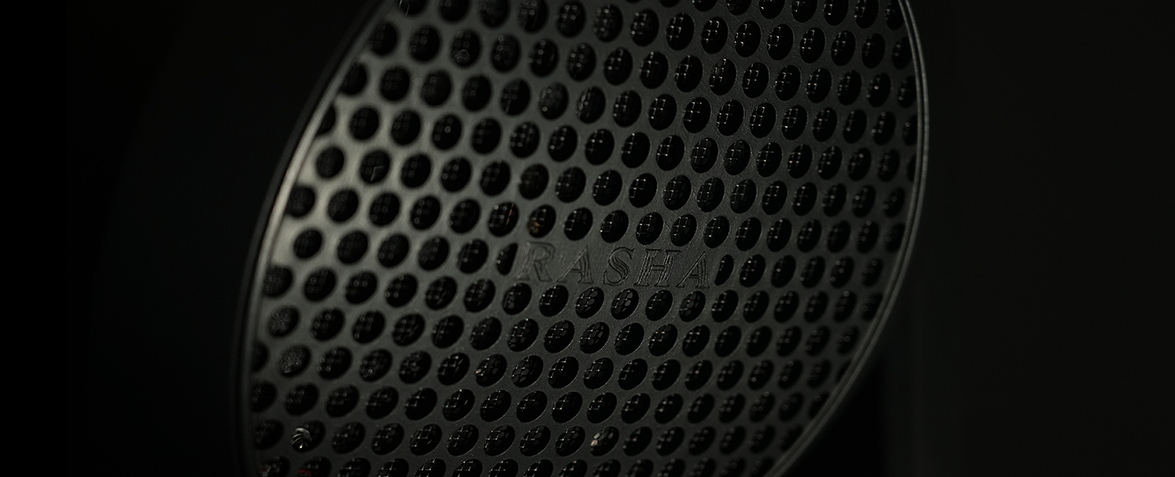
A fixture is only as good as the company standing behind it once it is out on a rig for months at a time. Rasha Professional is a U.S.-based manufacturer of stage lighting, atmospheric effects, LED video walls, and special effects equipment, built for production companies, rental houses, installers, venues, and event planners who cannot afford downtime.
Direct manufacturer warranty: No third-party claims process to navigate when a fixture needs service.
Real technical support: Help with troubleshooting and setup from people who know the product line, not a call center script.
Documentation that actually helps: Manuals and guides built for techs under time pressure, not just marketing copy.
Demo access: Showroom and virtual demo options so buyers see the fixture perform before it is on a show.
Financing available: Flexible payment plans for qualified buyers, so budget timing does not block a rig upgrade.
Jeremy, Photography Director at 60 Day Hustle, summed up the experience working with Rasha gear as delivering some of his best shows with great lighting behind them. That kind of feedback is what a broadcast lighting team wants to hear before they commit a fixture to their touring rig.
Ready to See the K2 FX on Your Rig?
Book a demo or ask about financing before your next broadcast build.
Common Questions About the K2 FX
Quick answers on flicker control, wireless DMX, IP rating, and warranty coverage for the K2 FX.
Yes. It supports selectable PWM up to 25000 Hz for flicker control, ships factory-calibrated for color match, and covers both wash and pixel effects from one fixture, which are the three most common problems broadcast lighting teams run into on camera.
A standard wash light only handles even coverage. The K2 FX adds a 210-LED LumaPix panel on top of the wash engine, so it can run pixel-mapped background effects from the same fixture. See the full moving head wash category for comparison.
Yes. It supports both CRMX and W-DMX through a Lumen Radio TiMo FX module, and it can run as either a receiver or a transmitter.
It carries an IP20 rating, which means it is built for indoor use, such as studios, theaters, and indoor arenas, rather than open-air outdoor rigs.
Both the main RGBW engine and the LumaPix panel are rated for 50,000 hours of life expectancy, which covers years of regular broadcast and touring use before replacement becomes a concern.
Yes, it carries a 2-year limited warranty on the fixture, backed directly by Rasha Professional.
Tyler Hayes
With over 15 years in the entertainment lighting scene, Tyler Hayes has helped shape unforgettable live experiences across stages, clubs, and festivals. He writes about how lighting transforms moments into lasting memories. His passion lies in inspiring others to see light not just as illumination, but as the heartbeat of every great event.
Related posts
Posted on 02/16/2026
Best Practices for Mounting and Positioning Moving Head Lights
Mounting moving head lights in accurate positions is important to ensure their smoo



