Posted on 07/01/2026
How Do I Choose the Right Professional Stage Lighting Manufacturer for My Production Company?
A practical buying guide for production companies, rental houses, and lighting designers evaluating manufacturer partnerships — not just product specs.
The right professional stage lighting manufacturer should provide reliable, well-tested products, responsive technical support, real product demonstrations, a clear warranty, accessible documentation, financing options, and a long-term commitment to supporting what you buy. Product specs matter, but the company standing behind those specs matters just as much.
Introduction
Most production companies treat a lighting purchase like a transaction. You compare lumen output, weight, IP ratings, maybe a beam angle chart, and then you buy. But anyone who has run a rental inventory for more than a few years knows the truth: the fixture is only half the decision. The other half is the company that built it.
When a moving head fails three days before a tour leg, or a control protocol changes and your console software needs an update, or a console operator needs a replacement gobo wheel that was discontinued two years ago — that's when you find out what kind of manufacturer you actually bought from. Reliability isn't just about whether the unit works on day one. It's about whether it still works and is supported on day 800.
This matters more now than it did a decade ago. Production companies are investing in larger inventories, more complex automated rigs, and tighter show schedules with less room for downtime. A manufacturer relationship that falls apart after the sale doesn't just cost you a repair bill — it costs you a show, a client, and sometimes a reputation you spent years building.
This guide walks through what separates a dependable manufacturer from one that simply sells equipment. It's written for people who already understand lighting — technical directors, production managers, rental house owners, and lighting designers involved in purchasing — so we'll skip the basics and focus on what actually changes the outcome of a purchase decision.
Visit Rasha Professional →
Schedule a Free Product Demo →
Why Choosing the Manufacturer Matters More Than Choosing the Product
It's easy to fall into the habit of comparing spec sheets side by side and picking whichever fixture has slightly better output per watt. But two fixtures with nearly identical specifications can lead to very different ownership experiences, because the spec sheet doesn't tell you anything about:
Service responsiveness — how quickly a technical question gets answered when a show is on the line
Spare parts availability — whether replacement lenses, boards, or motors will exist in three years
Technical knowledge — whether the people on the other end of the phone actually understand the product, or are reading from a script
Future support — whether firmware and DMX profiles get updated as control systems evolve
Product lifecycle planning — whether the manufacturer tells you in advance when a product line is being phased out, or you find out the hard way
Buyers who only compare products end up comparing the wrong thing. The product is a snapshot. The manufacturer relationship is the actual asset you're purchasing — it's what determines whether your investment holds its value over the life of the equipment.
Visit Rasha Professional →
Schedule a Free Product Demo →
Key Factors Production Companies Should Evaluate
Below are the factors that consistently separate manufacturers worth building a long-term relationship with from those that are better avoided. Each one deserves real scrutiny before a purchase order goes out.
Product Quality and Build Consistency
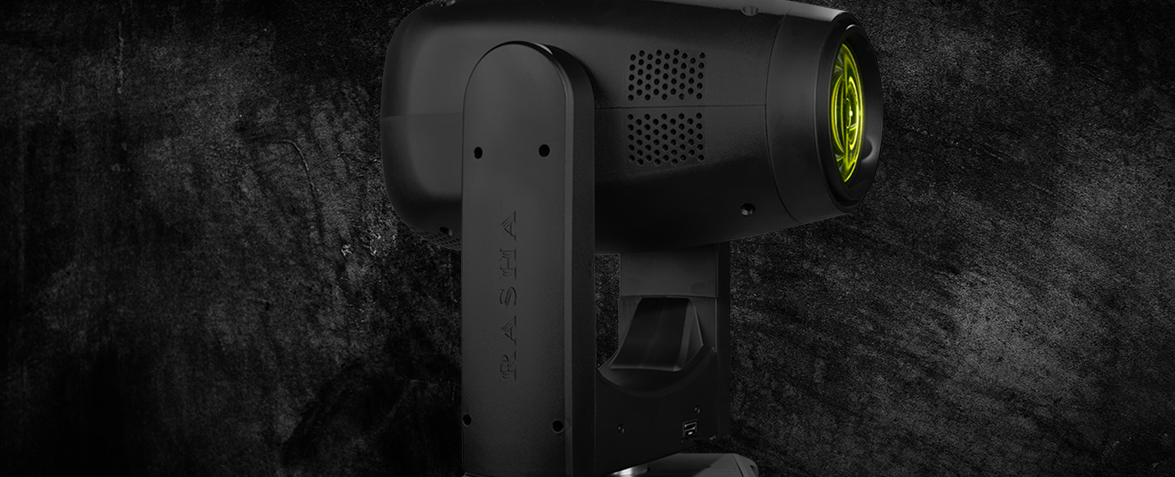
Fixture-to-fixture consistency is one of the most overlooked factors in a purchase decision. A rental company doesn't buy one fixture — it buys twelve, twenty, or a hundred of the same model, and those units need to match in color temperature, beam shape, and mechanical behavior when they're hung side by side on a truss. Ask a manufacturer about their quality control process during manufacturing, not just their final inspection. Tight tolerances during production are what prevent color-matching headaches on a show floor.
Product Testing and Real-World Reliability
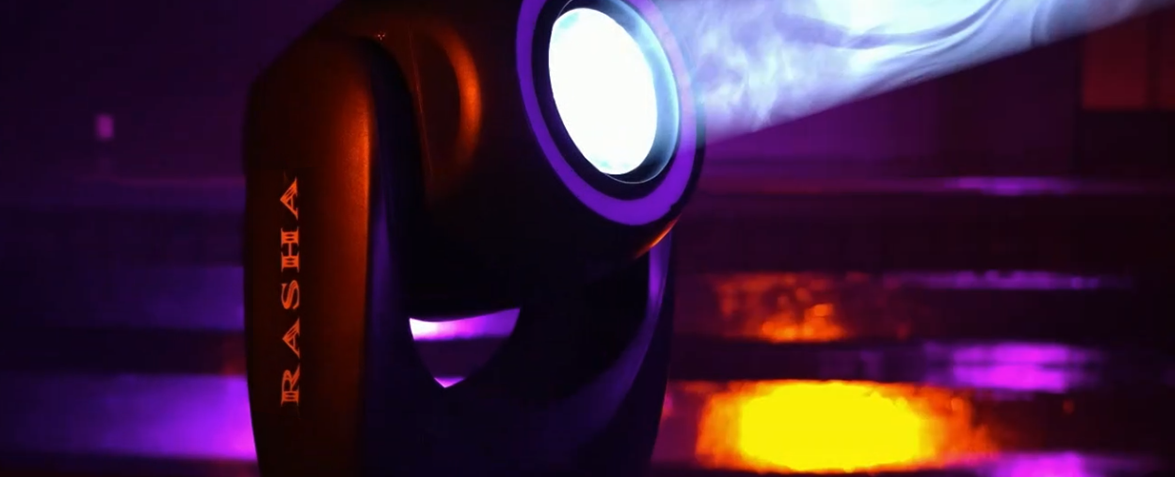
Specification sheets describe ideal conditions. Real shows involve heat, dust, extended run times, and rough handling during load-in and load-out. Ask how products are stress-tested before release — thermal cycling, continuous run testing, and vibration testing during transport are reasonable things to ask about.
Ease of Maintenance
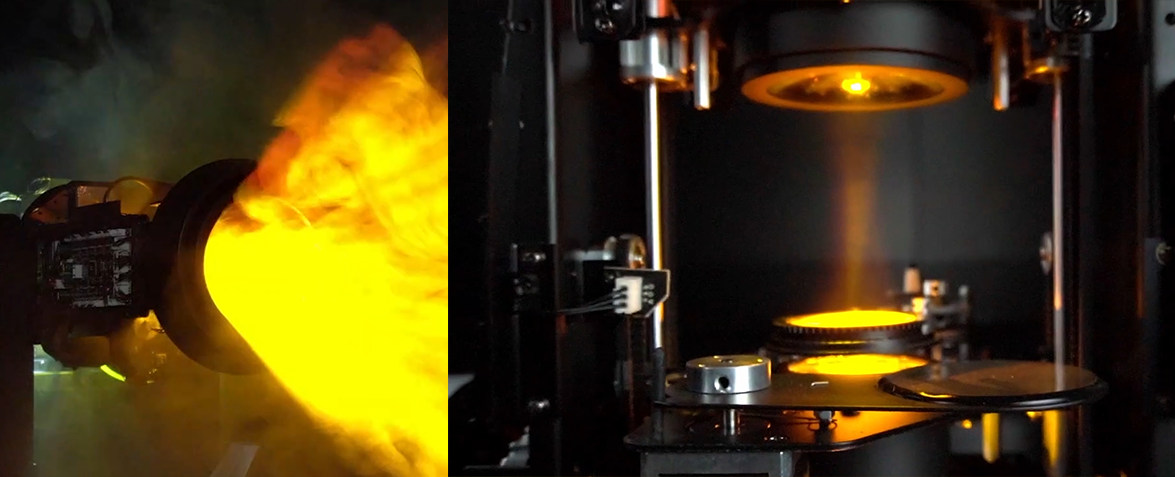
Field-serviceable fixtures save money over time. Manufacturers that design products with accessible internals, modular components, and clear service points reduce the labor cost of keeping inventory running. Ask whether routine maintenance — cleaning optics, replacing fans, swapping LED engines — can be done in-house or requires the unit to be shipped back.
Product Availability and Lead Times
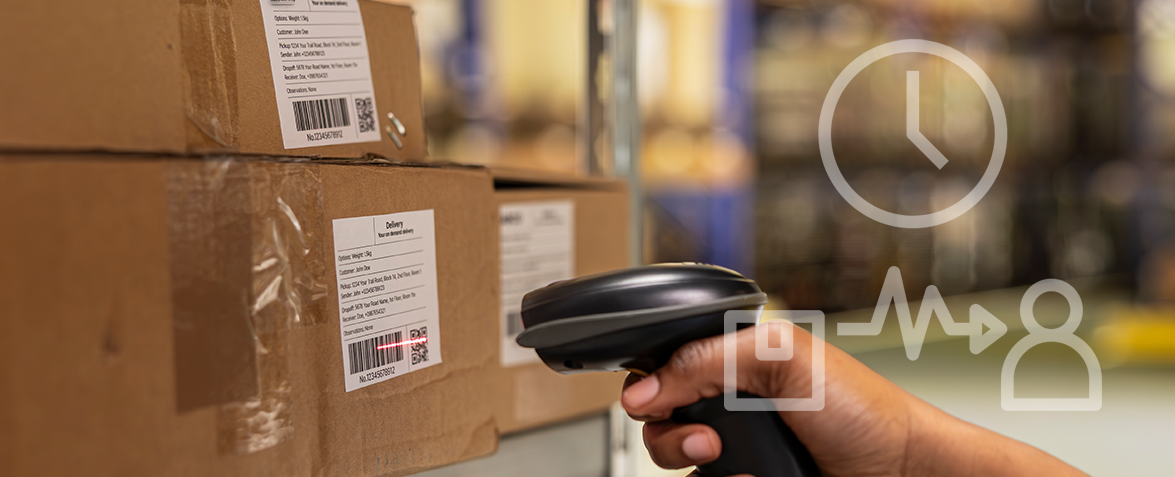
A great fixture that's backordered for four months doesn't help a production company that needs to fulfill a contract next quarter. Manufacturer inventory planning and production capacity directly affect whether you can scale your rental stock when demand spikes.
Spare Parts and Component Lifecycle
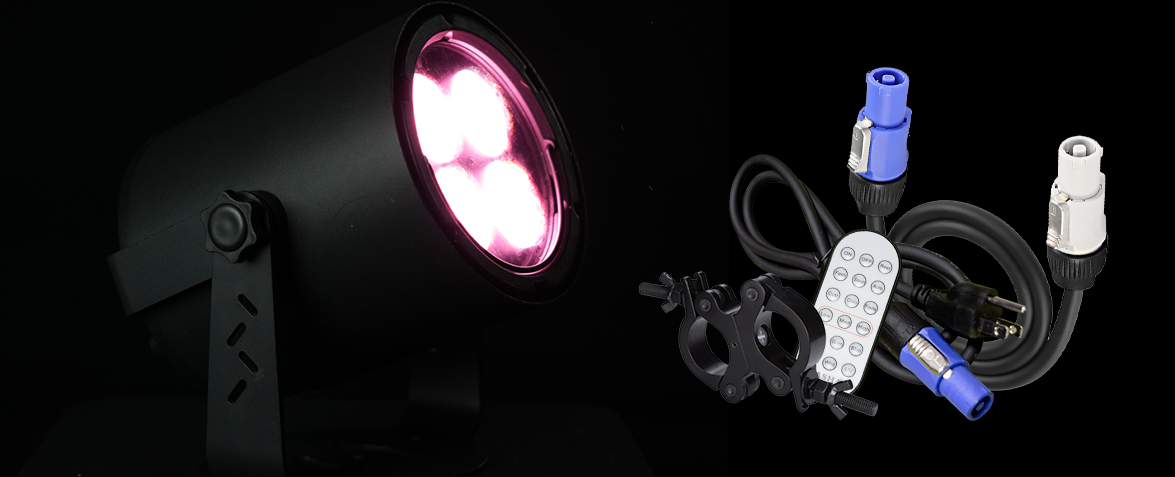
This is where many manufacturer relationships break down years after the original sale. Ask directly: how long will spare parts be available after a product is discontinued? A manufacturer with a clear, published parts-availability policy signals that it understands what it means to own equipment for the long haul.
Technical Documentation
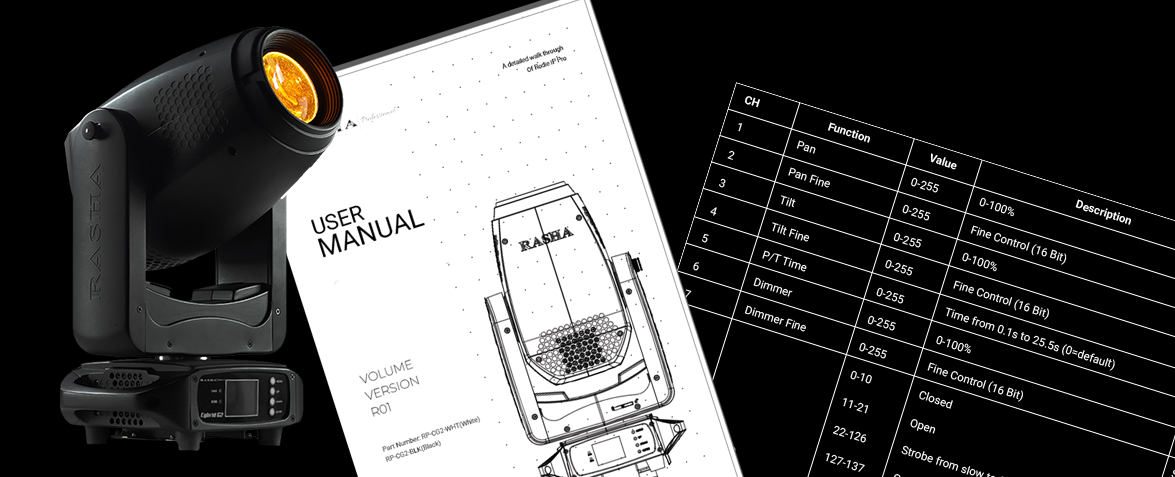
Manuals, DMX charts, RDM profiles, and service guides should be easy to find without submitting a support ticket. If documentation is hard to access before the sale, it usually stays hard to access after the sale.
Software and Firmware Updates
Control protocols, console compatibility, and network standards continue to evolve. A manufacturer that actively updates firmware to keep products compatible with newer consoles and software extends the usable life of your inventory significantly.
Customer Support and Technical Support
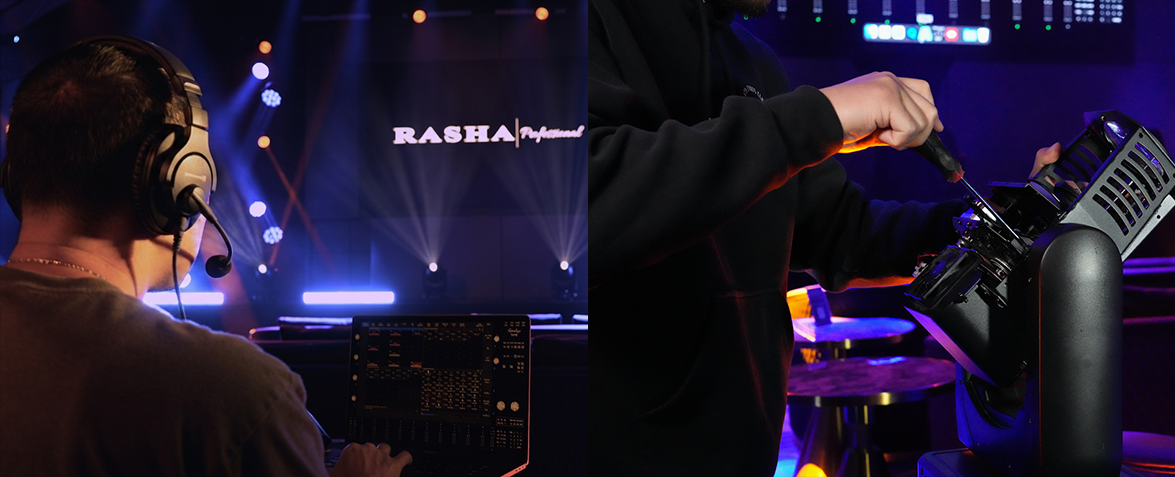
There's a difference between customer support (order status, returns, account questions) and technical support (a programmer on the phone at 4 pm before doors open, trying to diagnose a DMX addressing issue). Ask how technical support is staffed, what hours it's available, and whether you'll be talking to someone who has actually operated the product.
Manufacturer Warranty
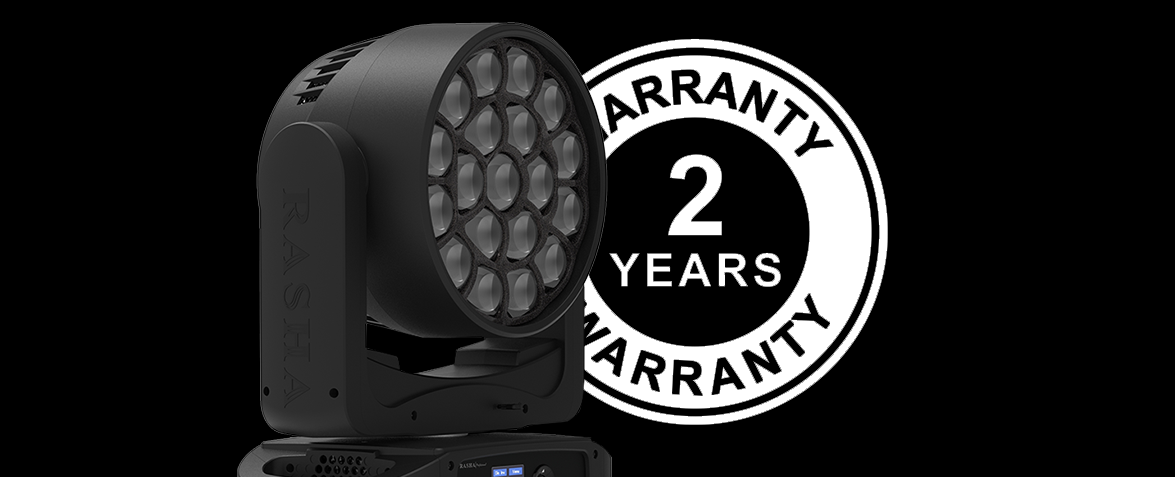
Warranty length is only part of the picture. What's actually covered? Is it parts only, or parts and labor? Does it cover LED engines and moving parts, which are the components most likely to fail? Read the fine print before assuming "warranty" means the same thing across manufacturers.
Financing Options

Scaling a rental inventory is capital-intensive. Manufacturers that offer financing or flexible payment structures make it easier for production companies to grow their stock without straining cash flow, particularly heading into a busy season.
Visit Rasha Professional →
Schedule a Free Product Demo →
Product Training
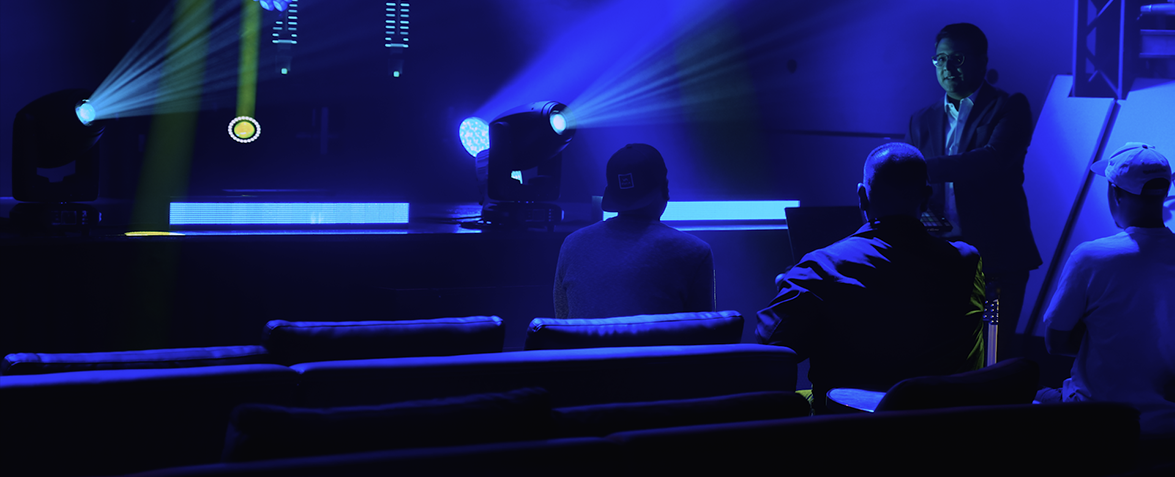
Training reduces programming time on site and reduces operator error. Manufacturers that offer structured training — whether for your programmers, your rental staff, or your technicians — are investing in your team's ability to use the product well, not just sell it to you once.
Factors production companies commonly weigh when evaluating a lighting manufacturer, ranked by relative importance in purchasing decisions.
Why Product Demonstrations Matter More Than Spec Sheets
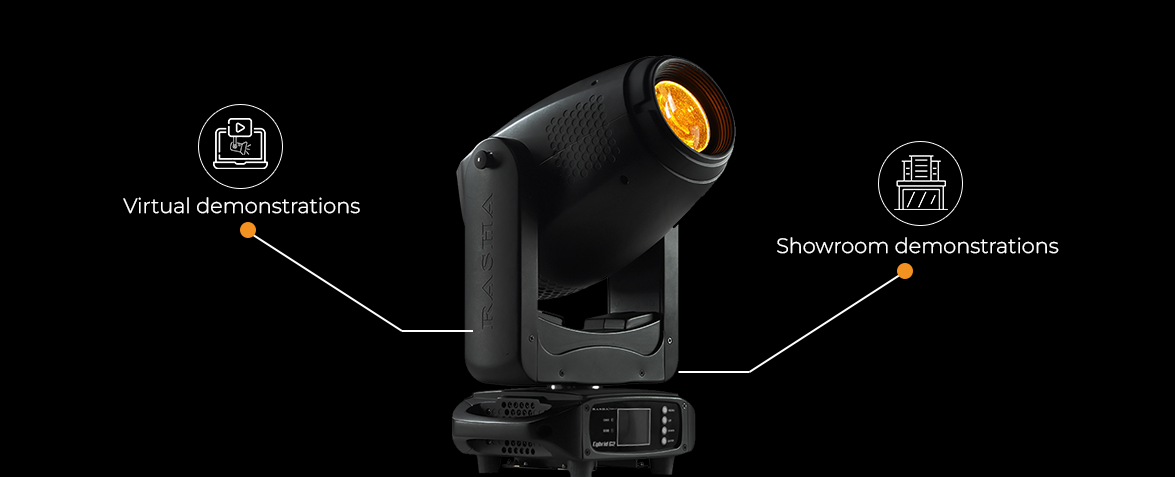
A spec sheet can tell you a fixture's rated lumen output. It can't tell you how the beam edge looks at full zoom, how quiet the fan is at full intensity, how smooth the pan and tilt motors move during a slow chase, or how the color mixing actually renders skin tones under a wash. These are things you can only judge by seeing the fixture run.
Before committing to a manufacturer, request a demonstration. This could mean:
Virtual demonstrations — a live video walkthrough where a product specialist runs the fixture through its paces while you ask questions in real time
Showroom demonstrations — visiting a manufacturer's showroom to see fixtures running side by side, compare beam quality directly, and test programming on an actual console
Rasha Professional offers both virtual and showroom demonstrations for production companies evaluating equipment, which lets buyers compare beam quality, color rendering, movement, programming behavior, and noise levels firsthand before making a purchasing decision. Seeing a fixture run — rather than reading about how it should run — consistently prevents costly mismatches between what a buyer expected and what arrives on a truck.
Visit Rasha Professional →
Schedule a Free Product Demo →
Manufacturer vs. Distributor: What's the Real Difference?
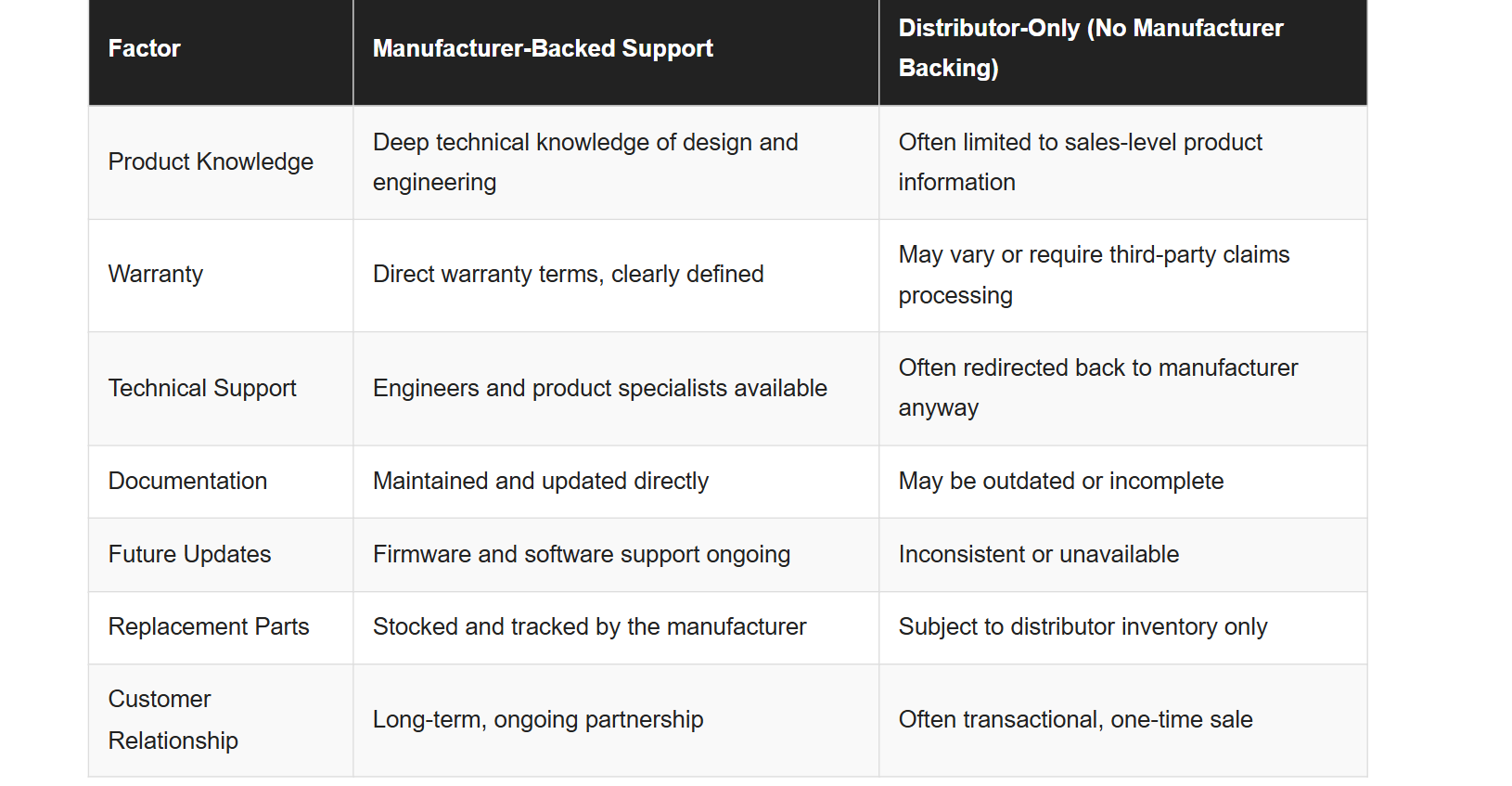
Many production companies purchase through authorized resellers rather than buying direct, and that's a perfectly reasonable path — as long as the manufacturer's support still reaches you through that channel. The table below outlines what typically differs between buying direct from a manufacturer and buying through a distributor with no manufacturer-backed support.
Visit Rasha Professional →
Schedule a Free Product Demo →
Questions Buyers Should Ask Every Manufacturer
Before signing a purchase order, it's worth running through a short list of direct questions. A manufacturer's willingness — and ability — to answer these clearly tells you a lot.
Can I see a live or recorded demonstration of this fixture before buying?
What exactly does the warranty cover, and for how long?
How is technical support handled, and what are the response times?
Are manuals, DMX charts, and service documentation available online without a login?
Is financing available for larger inventory purchases?
Are spare parts available, and for how long after a product is discontinued?
How long will this product line be actively supported?
Is training available for my programming and technical staff?
Common Mistakes Production Companies Make When Choosing a Manufacturer
Even experienced buyers fall into a few recurring traps when evaluating manufacturers:
Buying only on price. The cheapest fixture upfront often becomes the most expensive fixture over a five-year ownership period once repairs, downtime, and parts unavailability are factored in.
Ignoring after-sales support. A manufacturer's responsiveness before the sale rarely predicts their responsiveness after it. Ask current customers about their post-purchase experience specifically.
Not requesting a demonstration. Specs on paper rarely match the experience of seeing a fixture run in person or on video.
Not checking warranty coverage in detail. "One-year warranty" can mean very different things depending on what's actually covered.
Not thinking about future expansion. Buying a one-off batch without confirming the manufacturer can supply matching units later leads to inventory mismatches down the road.
Ignoring documentation. If technical documentation is hard to find before the purchase, that's a preview of what support will look like after it.
Visit Rasha Professional →
Schedule a Free Product Demo →
How to Evaluate a Lighting Manufacturer: A Simple Process
1. Research the Manufacturer
↓
2. Request a Demonstration
↓
3. Evaluate Technical Support
↓
4. Confirm Warranty Terms
↓
5. Make the Purchase Decision
Why Long-Term Support Matters More Than It Seems at Purchase Time
The purchase is a single moment. Ownership is years long. What determines whether that ownership period goes smoothly is the infrastructure a manufacturer has built around the product after it ships: documentation that stays current, firmware that keeps pace with new control systems, spare parts that remain in stock, and a customer service team that treats a five-year-old fixture with the same seriousness as a brand-new one.
Production companies that prioritize this kind of long-term infrastructure when choosing a manufacturer consistently report less downtime, faster turnarounds on repairs, and fewer surprises when scaling their inventory. It's not the most exciting part of a purchasing decision, but it's usually the part that determines whether the relationship was worth it three years later.
Visit Rasha Professional →
Schedule a Free Product Demo →
Where Rasha Professional Fits Into This Picture
Rasha Professional was built around the idea that the relationship doesn't end at the sale. For production companies evaluating manufacturers against the criteria above, here's where that shows up in practice:
Demonstrations. Both virtual and showroom demonstrations are available, so buyers can see beam quality, color rendering, and fixture movement before committing.
Manufacturer warranty. Clear, direct warranty terms backed by the manufacturer itself, not routed through a third party.
Financing. Options designed to help production companies scale inventory without disrupting cash flow during peak season planning.
Technical support. A team that understands the products because they were involved in building them, available to help troubleshoot real production issues.
Customer service. Ongoing support that continues well past the initial purchase, for as long as the equipment is in service.
Product resources and documentation. Manuals, DMX information, and service guides made accessible without friction, because hidden documentation just delays problems instead of preventing them.
None of this replaces the due diligence outlined above. It's simply meant to illustrate what manufacturer-backed support looks like when the criteria in this guide are actually applied.
Conclusion
Choosing a professional stage lighting manufacturer is a decision that extends well past the purchase order. The fixtures themselves matter, but so does everything that happens after they arrive — the technical support when something goes wrong, the spare parts when a component wears out, the documentation when a new programmer joins the team, and the warranty coverage when a repair is actually needed.
Production companies that evaluate manufacturers on long-term value, support infrastructure, and partnership — rather than price alone — tend to build inventories that hold up under real production demands for years, not just months. Before your next purchase, take the time to ask the questions outlined in this guide, request a demonstration, and read the warranty terms closely. The manufacturer you choose today is the one you'll be calling in three years when something needs fixing.
Considering a new lighting manufacturer for your production company? Rasha Professional offers virtual and showroom demonstrations, manufacturer-backed warranty, technical support, and financing options for production companies evaluating their next equipment investment. Learn more at rashaprofessional.com.
Frequently Frequently Asked Questions About Choosing a Professional Stage Lighting ManufacturerAsked Questions
Selecting the right lighting manufacturer involves more than comparing specifications. These frequently asked questions cover the factors production companies, rental providers, and lighting professionals should evaluate before investing in professional stage lighting, including product support, warranties, demonstrations, financing, and long-term reliability.
Most experienced buyers evaluate a combination of product quality, technical support availability, warranty terms, documentation, and long-term parts availability — not just price or specifications alone.
Technical issues tend to surface during live production, when downtime is costly. Manufacturers with responsive, knowledgeable technical support help production companies resolve problems quickly and avoid show-day disruptions.
Either can work well, as long as the distributor is an authorized partner with manufacturer-backed warranty, parts, and technical support behind the sale. The key is confirming that backing exists before purchasing.
Yes. Specification sheets can't show beam quality, color rendering, movement smoothness, or noise level. A virtual or showroom demonstration lets buyers evaluate these factors directly before committing.
Warranty length varies by manufacturer, but buyers should confirm exactly what's covered — parts, labor, LED engines, and moving components — rather than assuming standard coverage across all manufacturers.
Ask about demonstrations, warranty coverage, technical support response times, documentation access, financing options, spare parts availability, product lifecycle support, and training options.
Compare more than specs. Evaluate build consistency, after-sales support, documentation quality, parts availability, and warranty terms side by side, ideally by speaking with current customers of each manufacturer.
Many manufacturers, including Rasha Professional, offer financing options to help production companies scale their inventory without straining cash flow ahead of a busy season.
Equipment fails over time, and a fixture that can't be repaired due to discontinued parts becomes a liability rather than an asset. Manufacturers with clear, long-term parts policies protect a production company's investment.
This varies by business model, but companies that plan inventory expansion alongside a manufacturer relationship — rather than purchasing reactively — typically maintain better fixture consistency and avoid compatibility issues over time.

Tyler Hayes
With over 15 years in the entertainment lighting scene, Tyler Hayes has helped shape unforgettable live experiences across stages, clubs, and festivals. He writes about how lighting transforms moments into lasting memories. His passion lies in inspiring others to see light not just as illumination, but as the heartbeat of every great event.
Related posts
.png&w=1080&q=75)
Posted on 07/23/2026
Battery Powered Pinspot Bar: What Rental Companies Need to Know Before Adding One to Inventory
If you run a rental company, you already know most lighting fixtures are built for a showroom, not a truck. They look great on a demo table and fal
Posted on 07/15/2026
Church Lighting Upgrade Guide: How to Plan a Modern Worship Lighting System
I have stood on more church platforms at 11 pm on a Saturday than I can count, aiming a fixture at a pulpit while someone holds a ladder. Church li
Posted on 05/14/2026
Why U.S. Production Companies Are Rethinking Their Stage Lighting Strategy in 2026
A Complete Guide to Choosing the Right Professional Stage Lighting Partner — and Why It Starts with Rasha Professional
What Is Profe
.png&w=1080&q=75)
Posted on 04/23/2026
LED Video Wall & Smoke Fogging Machine Guide
An LED video wall and smoke fogging machine are essential components of modern stage lighting and event production. LED video wall panels provide h



